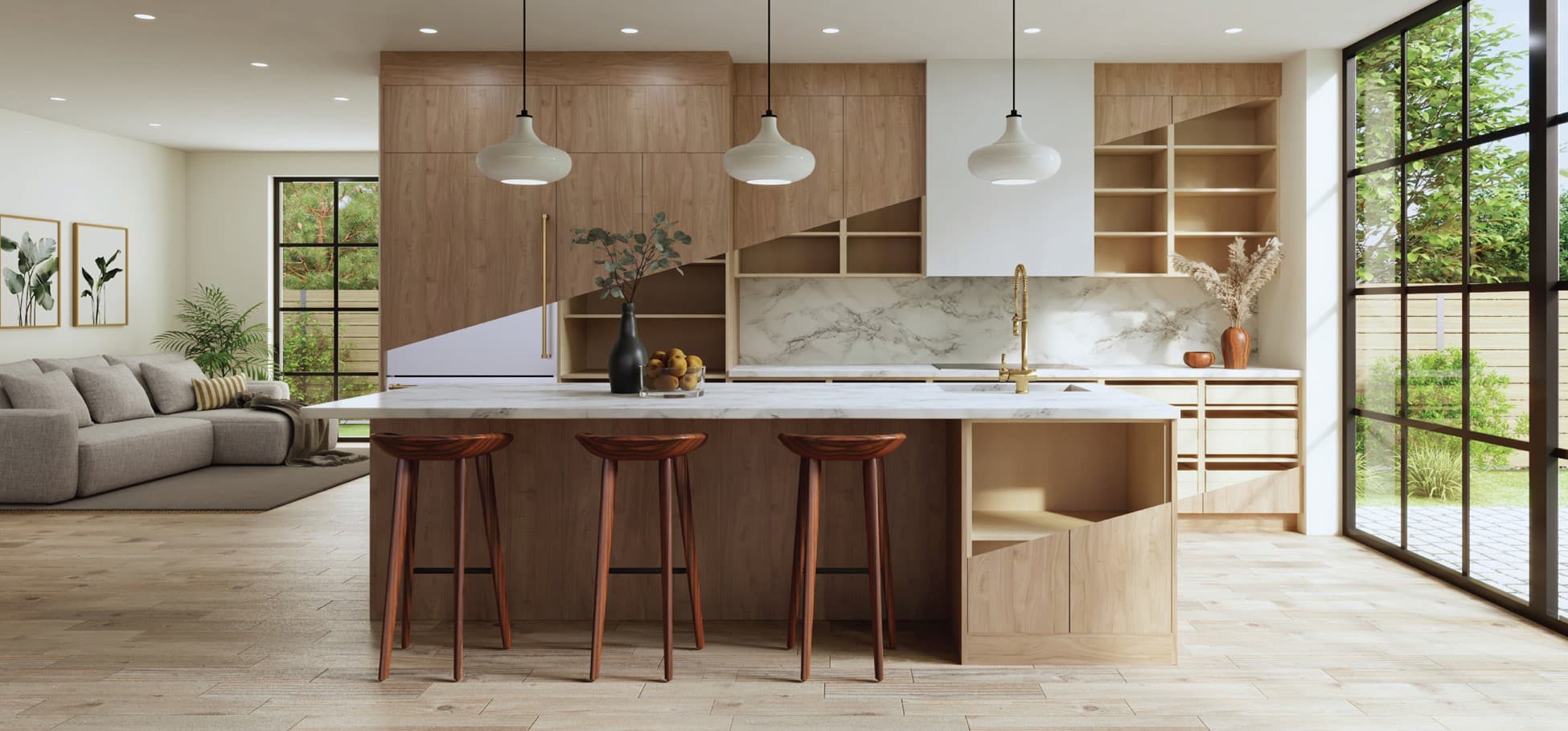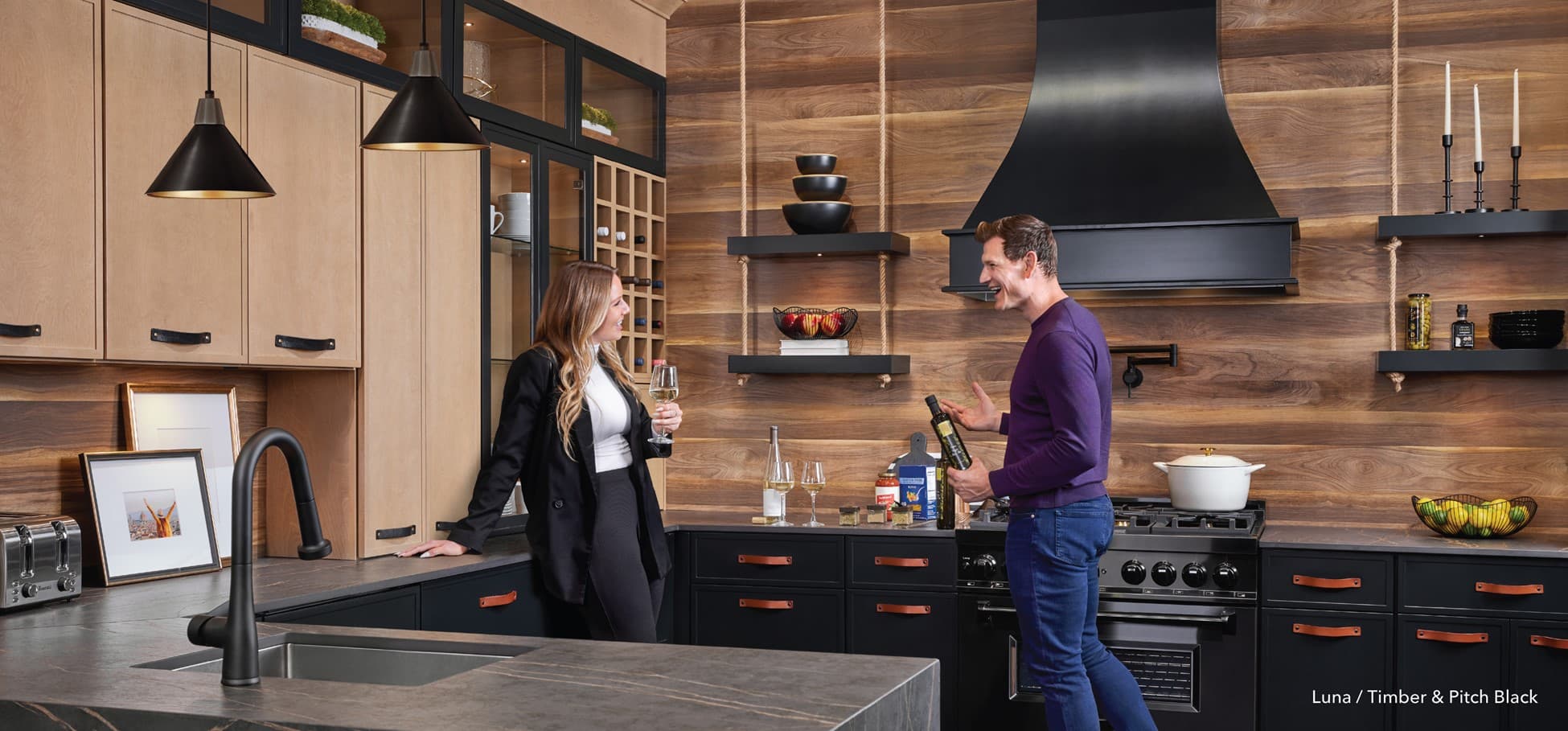
A practical guide to stock, semi-custom, and custom cabinetry for your kitchen renovation and how to pick the right level of fit, storage, layout, design, and speed.
Of course you want your kitchen to look good and last long. The better question is: what choices should you make to get there? For most kitchen renovations, that starts with one decision: stock, semi-custom kitchen cabinets, or full custom.
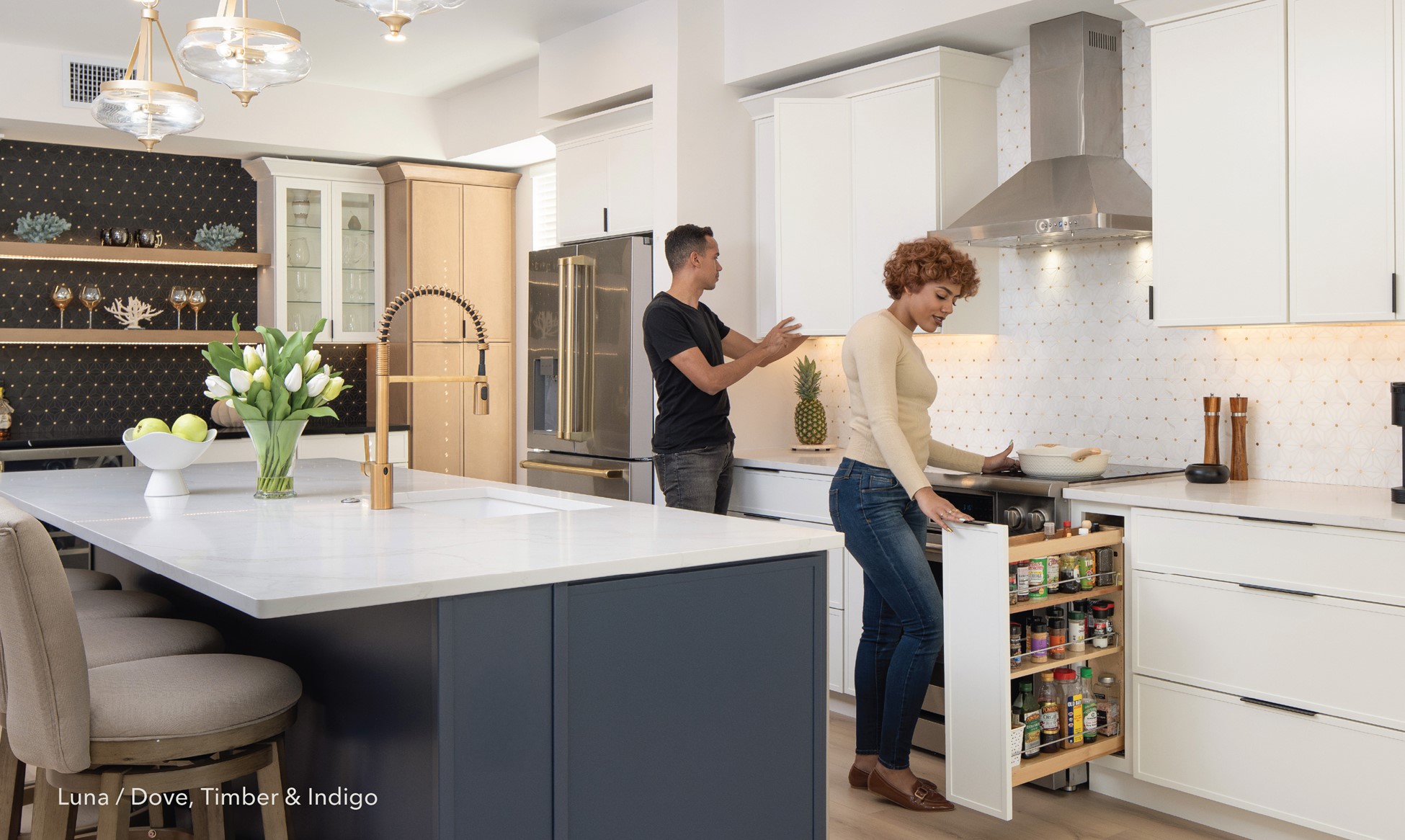
How often do you cook? Is it one person at the stove, or two people reaching around each other? Do you host every weekend, pack lunches every morning, buy in bulk? And where should the trash go while you're chopping? Would a spice pull-out beside the range save you the daily dig? Should the cutlery drawer sit next to the dishwasher?
Answer those first. They point you to the right kind of cabinetry far better than any showroom display.
In this guide you'll learn how to choose between stock, semi-custom, and full custom; why your routines should drive your kitchen layout design; how cabinet storage solutions change the way a kitchen works; what semi-custom can and can't solve; how today's door, box, and hardware really compare; and how to spot a well-built cabinet before you buy.
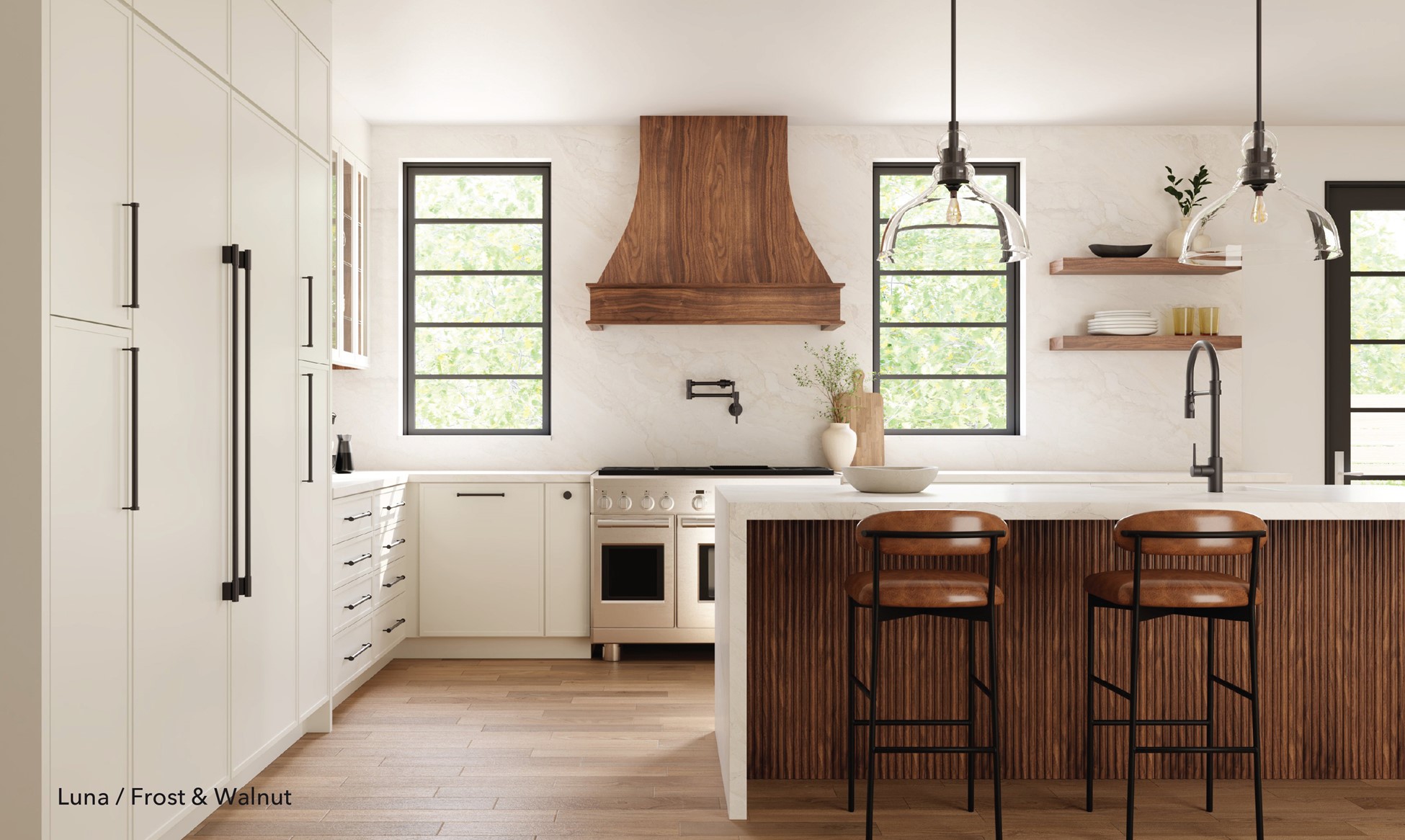
Stock, semi-custom, and custom cabinetry
Stock gives you a fixed menu. Semi-custom gives you a bigger menu and lets you make meaningful changes. Full custom lets you write the menu.
Semi-custom starts with an established cabinet system, then opens sizes, modifications, finishes, door styles, and accessories to fit your home. Fabuwood Cabinetry, for example, expands sizes, colors, add-ons, door profiles, and modifications without designing every part from zero.
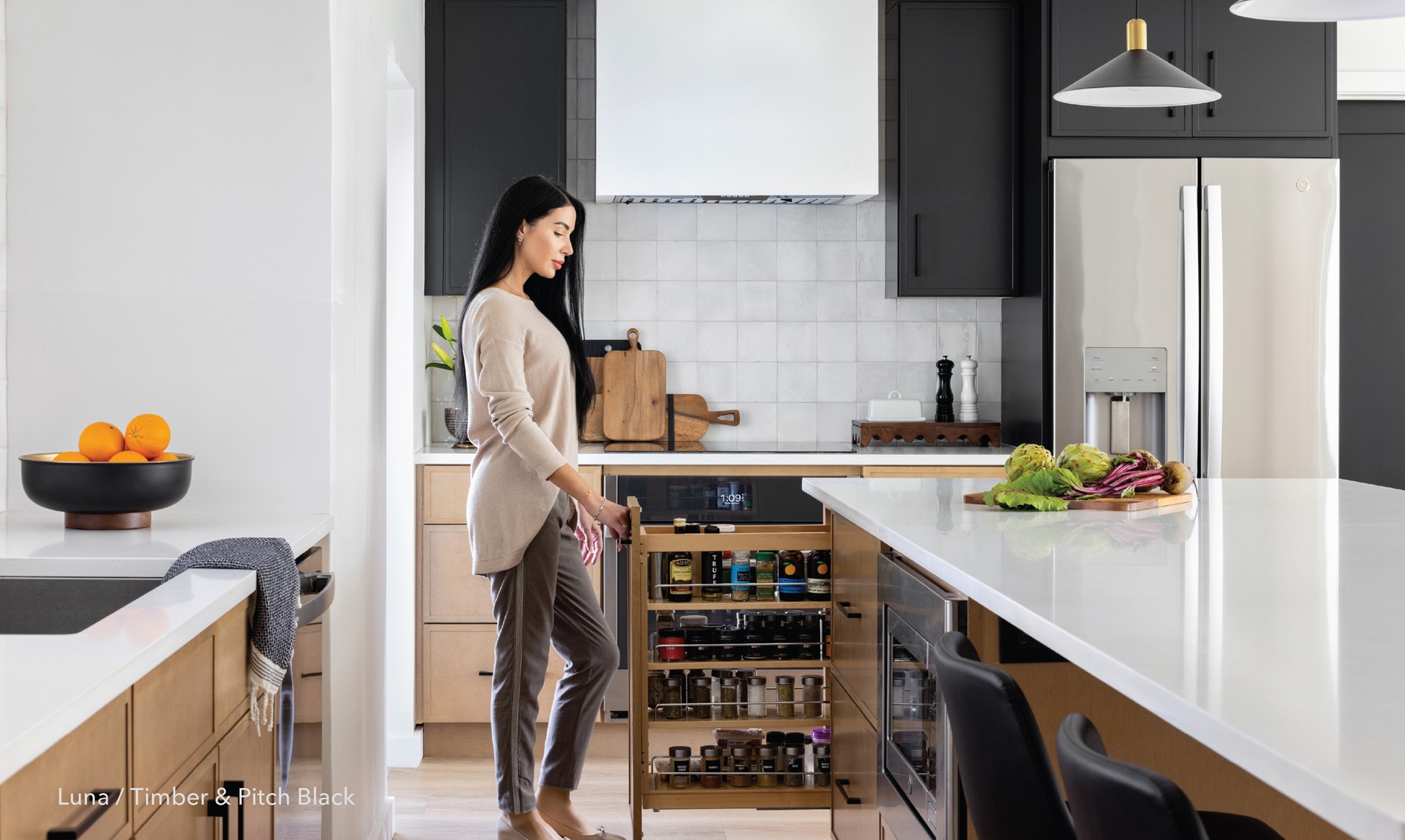
What semi-custom kitchen cabinets actually solve
Most kitchens don't need every cabinet invented from scratch. They need the layout to fit the room, the corners and tall walls to earn their keep, and storage built around how you actually cook. That's the everyday work semi-custom does well.
The biggest win is fit. Stock cabinetry comes in fixed widths, so it leans on filler strips and leaves dead inches you can't use. Semi-custom sizes and modifications close those gaps — seamless, custom-fitted runs that use vertical and corner space instead of hiding wasted inches behind a filler. It also keeps the project moving, since it starts from an established system. Fabuwood ships many stocked configurations in as little as five business days; modified orders take longer, so always confirm timing with your dealer.
Go full custom when the room genuinely demands the unusual: one-off dimensions, curved or furniture-style pieces, historic millwork to match, or rare materials and details no existing program offers. Nothing wrong with that — just make sure you're paying for it to solve a problem only full custom can.
The goal isn't the most customizable option. It's the customization your kitchen will actually use.
The more your room and your routine ask of the cabinetry, the more semi-custom earns its place.
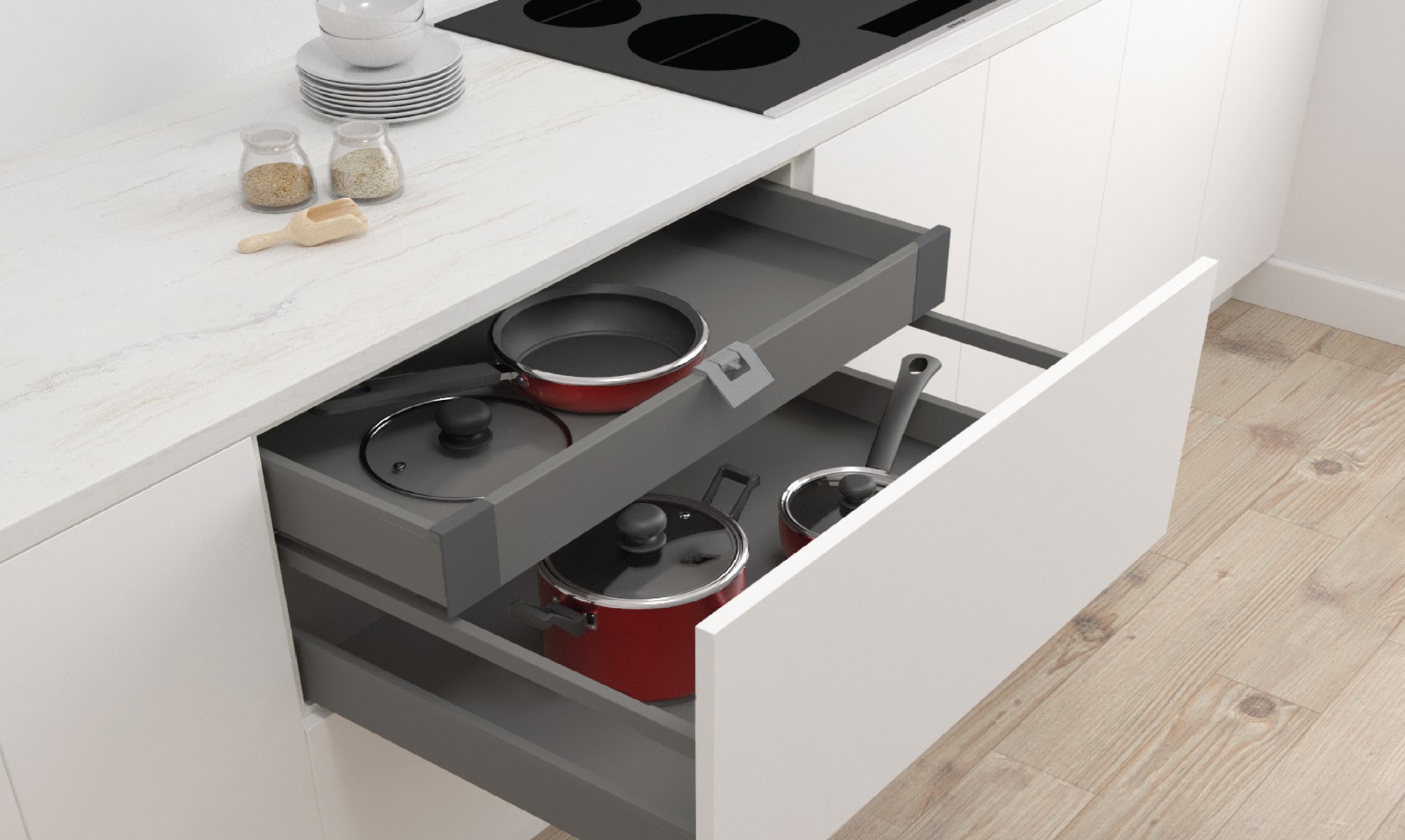
Cabinet storage solutions are the operating system
A gorgeous kitchen can still annoy you daily. It can have the perfect color and a great counter and still leave you nowhere to put the garbage while you cook. So don't treat storage as a last-minute extra — plan it first.
Plan by zone:
Prep — knives, utensils, boards, and trash near your main workspace.
Cooking — spices, oils, pots, and tools within reach of the range; narrow pull-outs turn spare inches into storage.
Cleanup — sink, dishwasher, cutlery, dishes, trash, and recycling as one connected zone.
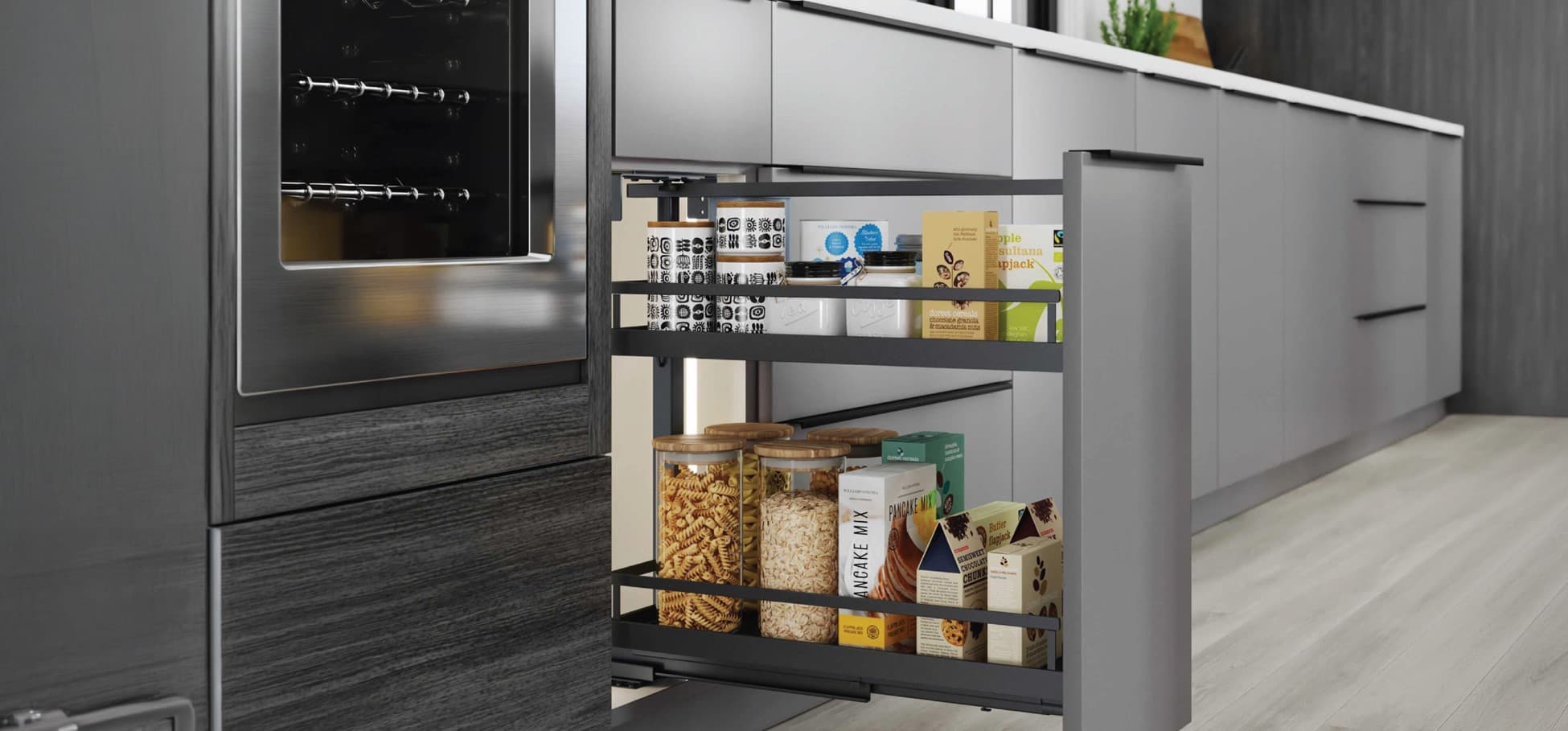
Pantry & appliances — tall pull-outs and appliance garages keep the toaster, mixer, and bulk groceries handy without eating counter space.
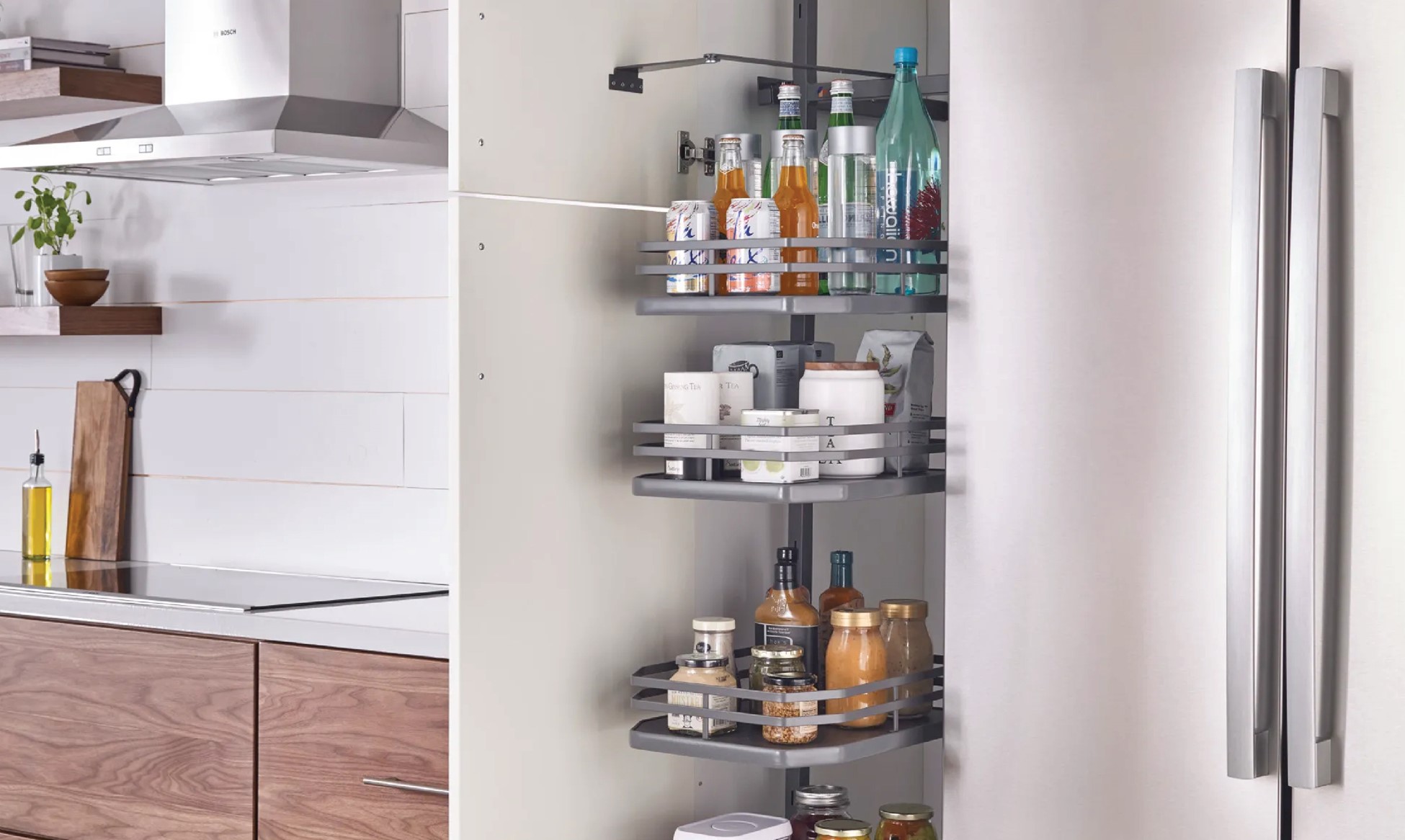
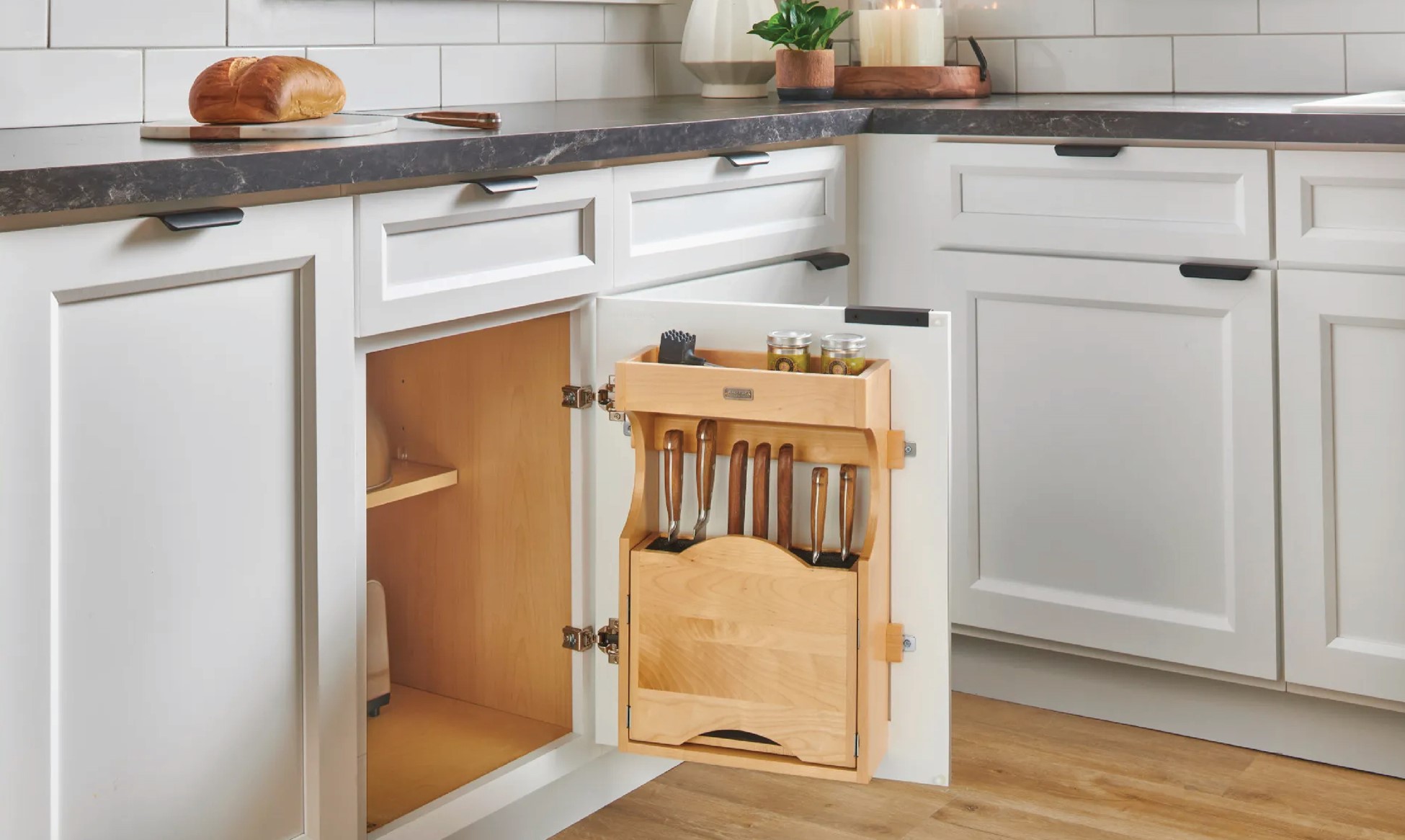
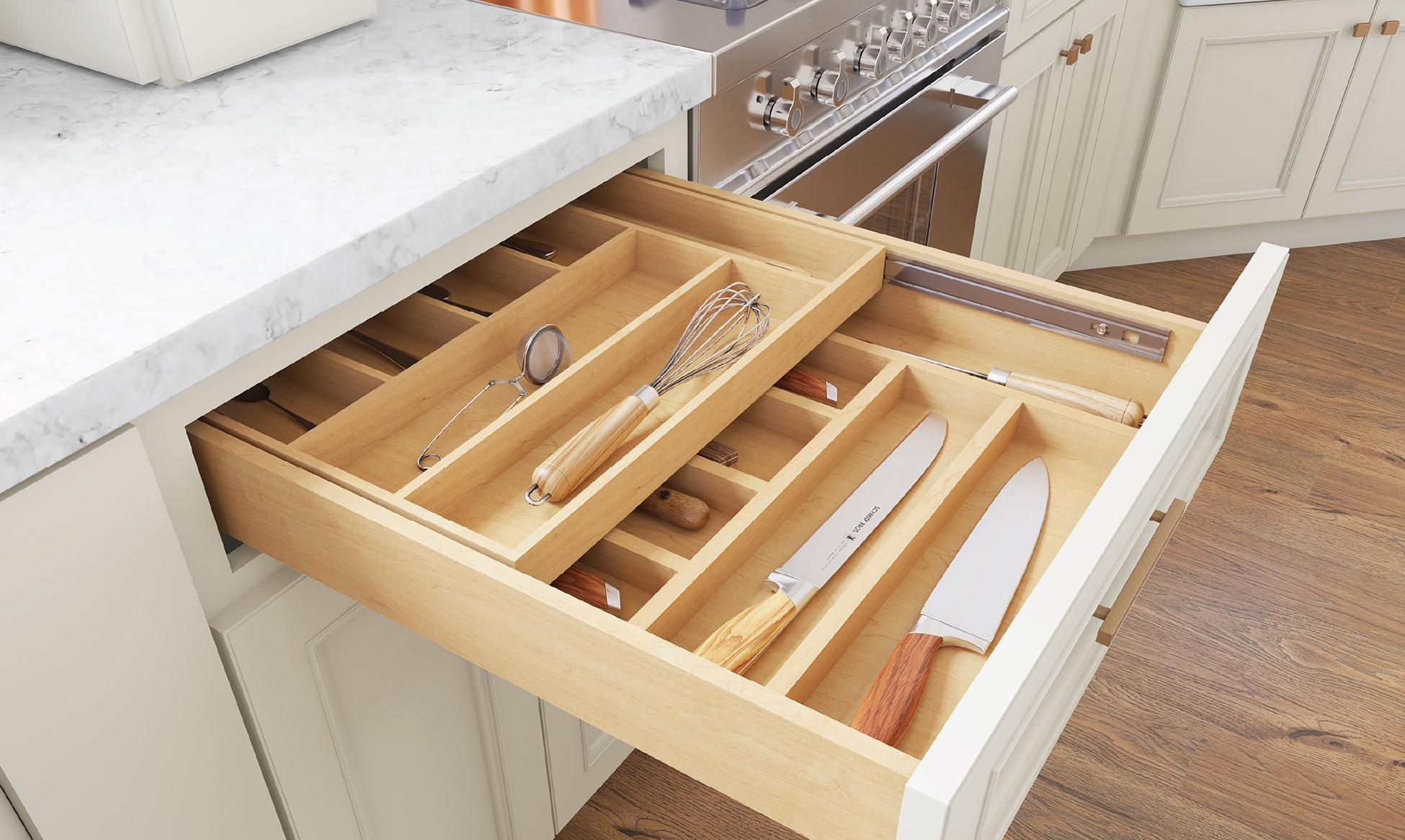
Fabuwood's accessory menu supports every zone: cutlery drawers and inserts, narrow spice pull-outs, trash systems, tilt-out trays, appliance garages, Lazy Susans, rotating corner units, pantry pull-outs, and modular organizers.
The rule: store an item where you use it, not just where it fits. And choose your accessories before you finalize the layout — a spice pull-out changes the cabinet sizes beside the range, a double trash system has to be planned around the sink, and a corner mechanism needs the right cabinet to live in. Pick the routines, choose the storage, then design the cabinets around them.
→ Browse the full accessories line
How to spot the best semi-custom kitchen cabinets: quick checks
Cabinet quality comes down to three parts: the door you look at, the box that supports it, and the hardware you use every day. Judge all three — a beautiful door on a weak box with cheap slides won't last.
1. The door you see
Pick by the look you want and the performance you need:
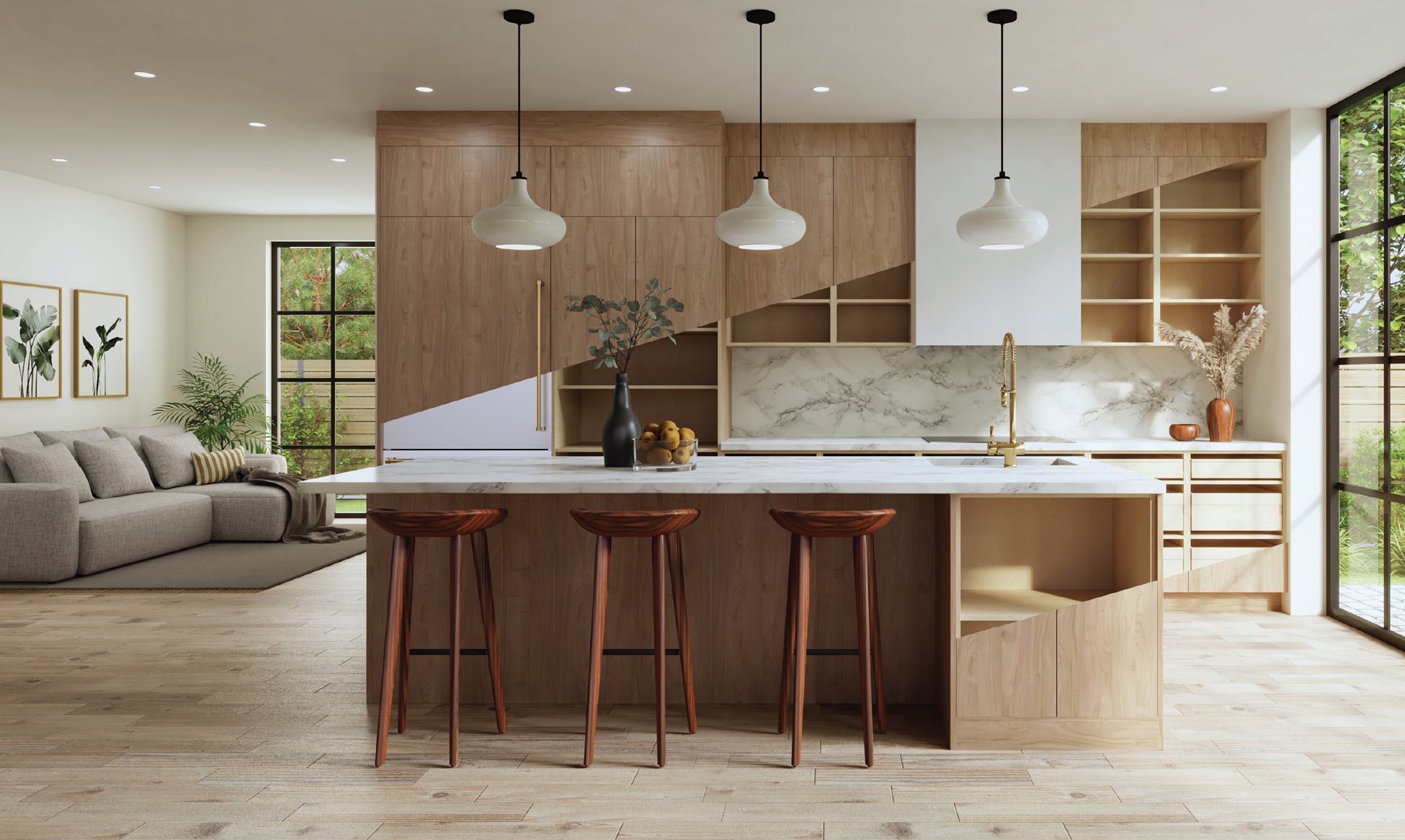
MDF / HDF (smooth painted look) — a strong choice for painted doors: it gives a consistent surface and good stability, so it's less likely than solid wood to show movement at the joints as humidity changes. Ask whether the door is one piece or built with a frame and center panel, and how the edges are sealed.
Solid wood (authentic grain) — real depth and natural variation; no two doors alike. Because wood expands and contracts with humidity, some movement and variation are normal. Ask about species, expected variation, protection, and repairability.
Wood veneer — real wood grain over a more stable core. Ask what the core is made from and how the edges are protected.
Textured melamine / TFL (wood look, engineered toughness) — recreates the pattern and tactile grain of wood with more consistent color, engineered to resist stains, scuffs, heat, and moisture. Quality still depends on the core, surface, and edge banding, so compare real samples.
Door construction matters as much as the material: compare thickness, joinery, center panel, edge finishing, coating, and resistance to heat and moisture.
2. The box you don't
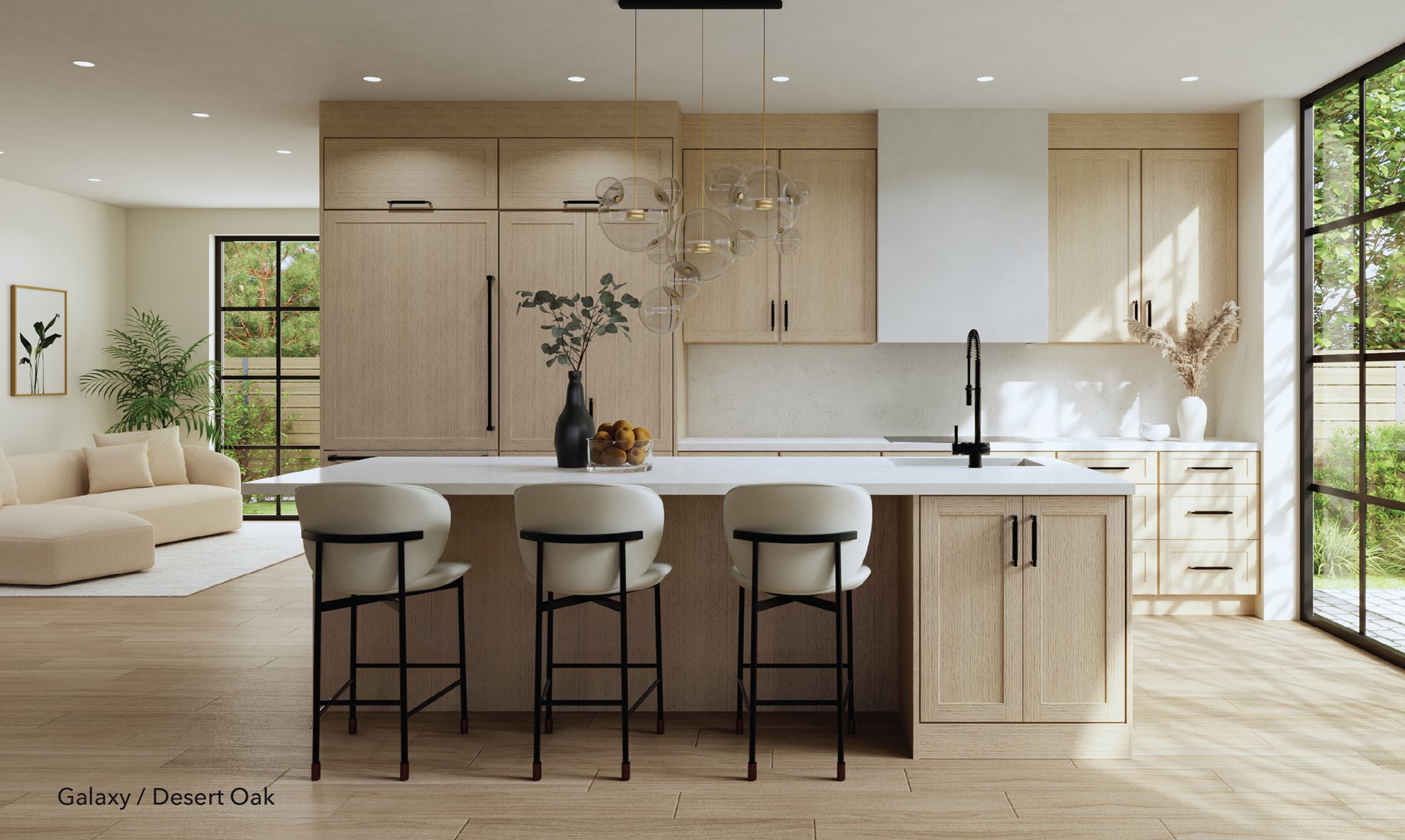
The cabinet box and drawers do the structural work, and this is where cheap cabinetry hides its shortcuts.
Plywood — valued for strength, screw and hinge holding, and moisture tolerance; it resists racking and holds up under heavy stone countertops.
Particle board — cheaper and heavier, and it can swell if it ever gets wet.
Engineered furniture board — often a dressed-up name for particle board. A high-grade, properly constructed, fully sealed version can perform well, but don't let the label do the talking — ask exactly what it is.
For frameless cabinetry, the box carries more of the structural load because there's no front face frame, so substantial side, top, and bottom panels matter. Three-quarter-inch panels are a strong benchmark, but read panel thickness together with the joinery, back construction, and overall build.
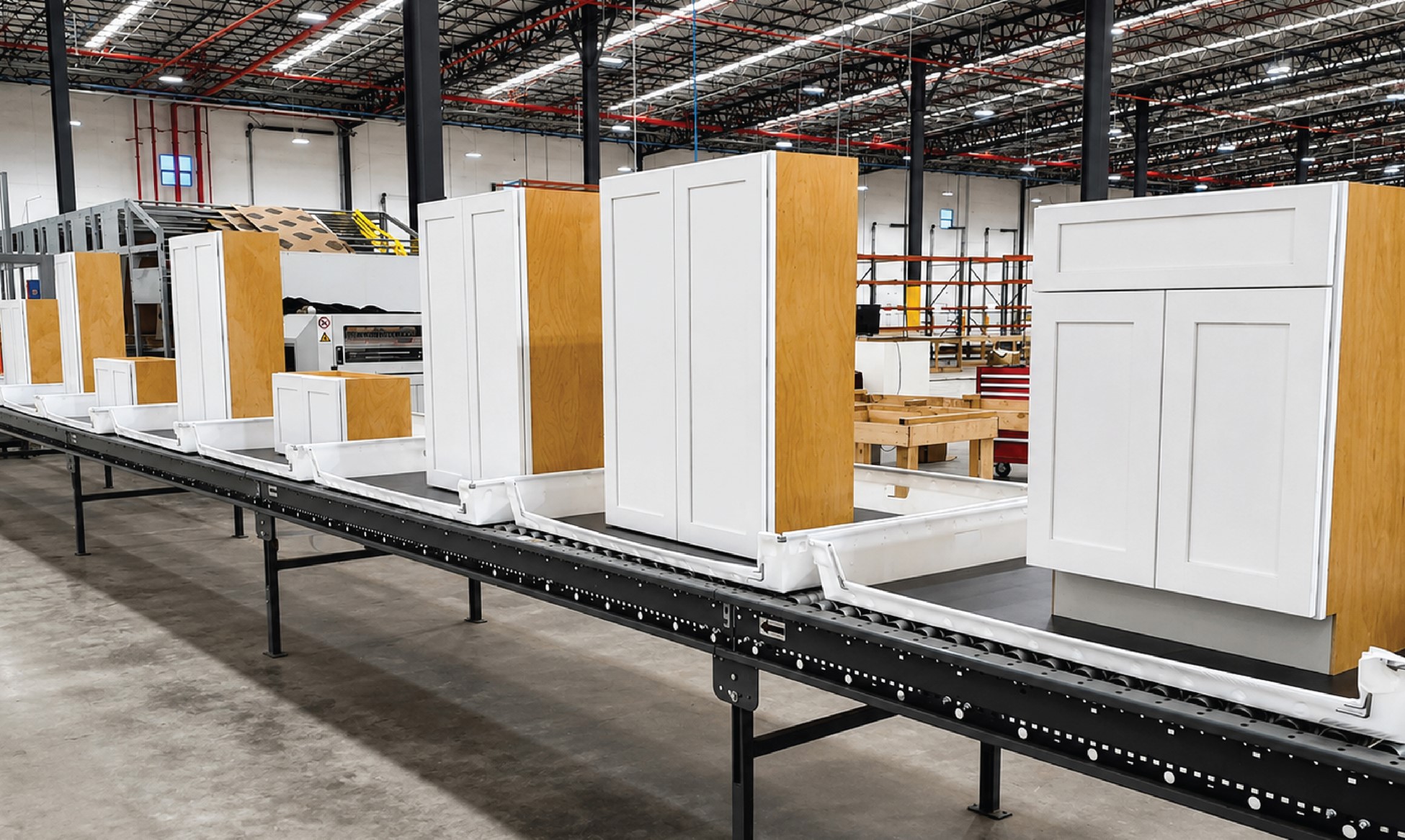
Check the back construction. A full cabinet back gives continuous support, adds rigidity, and can make installation easier. A cabinet built with only a hanging rail can still perform when it's properly engineered, reinforced, and installed — but ask how it's supported and attached to the wall.
Drawer boxes: solid wood (birch is common) with dovetail joinery outlasts stapled boxes by a wide margin. Dovetail is a good sign but doesn't guarantee quality on its own — the drawer material, bottom thickness, hardware, and assembly all matter. Ask about the material, the joint, and the load rating.
Fabuwood builds its boxes from plywood with solid birch dovetail drawers, and its finishes span paint, stain, textured and standard melamine, matte and gloss, and made-to-order custom colors.
3. The hardware you use every day
Hinges and slides are the parts you touch every day — and usually the first thing to fail on a cheap cabinet, long before the box or door gives out. Choose hinges and drawer slides from an established manufacturer, such as Blum.
Slides — undermount slides create a cleaner appearance; full-extension slides give access to the entire drawer. Match the load rating to how you'll actually use the drawer (a deep pot drawer carries real weight).
Soft-close — should be built for daily use, not a novelty. Ask whether it's standard or an upcharge.
Hinges — concealed, adjustable hinges let doors be realigned over the life of the cabinet as a house settles.
Ask about adjustment options, load capacity, warranty coverage, and replacement-part availability.
Fabuwood ships with Blum soft-close hardware, backed by Blum's limited lifetime warranty for the original purchaser.
A note on material safety
For composite wood products such as MDF, particleboard, and hardwood plywood, look for TSCA Title VI compliance, which meets the same formaldehyde emission limits established by CARB Phase 2. Since 2019, TSCA Title VI has been the required U.S. labeling language for regulated products.
A better question than “is wood better than MDF?”: What's the core? What's on top? How are the edges protected? What are the slides and hinges rated for, and is soft-close standard? Will color vary door to door? Can I see a full-size sample?
Is it well made? Quick checks
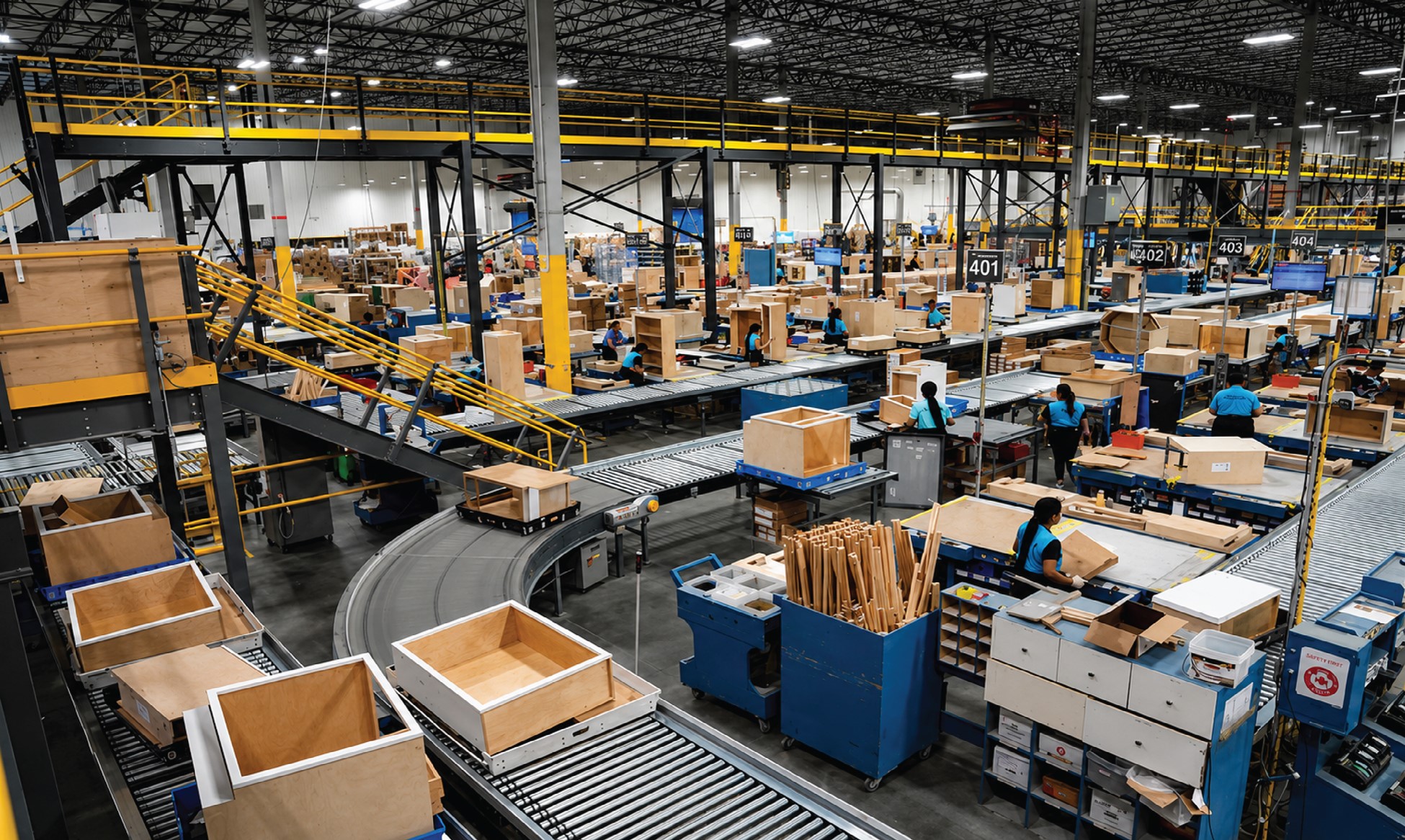
The box & shelves — should feel rigid, not flimsy. Check the material (plywood vs. particle board), shelf thickness, and back construction. A familiar material name doesn't guarantee quality.
The drawers — should extend fully, glide smoothly, and stay stable when open; soft-close should be built for daily use.
The doors — check corners, seams, edges, and finish consistency; on a wood-look door, see how naturally the pattern and texture align.
Lead time — ask how fast the line ships, both for the original order and for replacement parts or a single door down the road. Short, reliable lead times are a real advantage; Fabuwood ships many stocked configurations in as little as five business days (modified orders take longer).
Testing & standards — look for a recognized third-party benchmark, such as AWI Premium Grade qualification, plus emissions compliance like CARB 2 / TSCA Title VI. A maker may also run its own program on top of that (Fabuwood's is the Q12 promise).
The warranty — read what's covered, for how long, whether it's original-owner-only, and who handles claims. Check hardware separately: Fabuwood ships with Blum soft-close hardware under Blum's limited lifetime warranty for the original purchaser. Specs vary by series, so compare the exact line you're considering.
How much do semi-custom kitchen cabinets cost?
A lower quote often just means fewer cabinets, fewer modifications, or none of the accessories you asked for. Get an itemized proposal — cabinetry, modifications, accessories, decorative panels, door and surface selections, delivery, installation, and old-cabinet removal — so two quotes are actually comparable.
Then ask every brand the same short list:
Can this line solve my layout without excessive fillers?
Which accessories and modifications are available in the exact series?
What are the box, drawer, door, and hardware specs?
Can I see full-size samples?
What's the warranty, and the current lead time with my modifications?
Who verifies measurements and helps if a piece arrives damaged?
Heads-up: enough one-off modifications and premium accessories can push semi-custom toward custom pricing. That's fine — just make each addition earn its place.
Your planning order
Write down how you actually use the kitchen.
Map the zones — prep, cooking, cleanup, pantry, appliances.
List the accessories that help those routines.
Choose your design direction — door style and finish (natural wood, stain, or paint).
Decide which tier solves the plan (don't default to full custom).
Compare lines using the same layout.
Order real samples and view them from morning to night.
Confirm the full price and lead time with every add-on included.
Confirm the final measurements have been professionally verified.
Explore Fabuwood's accessories, order samples, or connect with a local dealer to start planning around your space, routine, and timeline.
FAQ
When should I choose semi-custom instead of stock? When standard sizes don't fit the room, you need specific storage, design matters, or it's a long-term investment. Stock can be plenty for a simple layout, a rental, or a tight budget.
Is semi-custom as good as full custom? They solve different needs. Semi-custom gives a tailored layout, deep accessories, and broad design choice without inventing every cabinet. Full custom suits unusual architecture, exact one-off dimensions, and details outside any existing program.
What's the best door material? There isn't one. MDF/HDF for smooth paint, solid wood or veneer for authentic grain, textured melamine/TFL for realistic wood looks with strong everyday resistance. The whole door — core, surface, edges, finish — matters more than the label. And don't forget the box and hardware: plywood beats particle board where it counts, and quality slides and hinges are what you feel every day.
What should I ask a designer first? “Can we plan the kitchen around how I cook, clean, store, and host before we pick the door?” The answer tells you more than any showroom display.