Throughout the course of history, kitchens have drastically changed from their humble beginnings. The modern-day kitchens we’re accustomed to seeing today did not always look so lavish and appealing. If you’ve ever wondered how kitchens came to be the magnificent spaces they are today, we invite you to take a trip down memory lane and check it out below.
1. 19th century
2. 1910 – 1920’s
3. 1930-40’s
4. 1950’s
5. 1960-70’s
6. 1980’s
7. 1990’s and early 2000’s
8. 2010’s and now
Humble Beginnings
In the very beginning, the kitchen was not the most functional of places, with barely any storage space. Storing of dry foods and goods was mostly achieved through the use of cellars and shelves. There was no socializing or entertaining of any kind in the kitchen, as its only purpose was a place to prepare food. All of the cooking was done over a big fire place, in cauldron looking pots.
Many homes during the 19th century also had the help of house maids and servants. The kitchen was to be occupied only by these workers. It’s also important to note that the kitchen itself was always out of sight. It would either be in the basement area or towards the back of the home, not to be shown off in any way.
<a data-pin-do="embedPin" data-pin-width="large" data-pin-terse="true" href="https://www.pinterest.com/pin/198932508527384489/"></a>
Roaring Industry
During the roaring twenties, societal changes were heavily impacting the evolution of kitchens. The industrial revolution gave way to new advances and inventions that aimed to make life easier, and more practical. A company by the name of Hoosier Manufacturing Company made headway by introducing the very first cabinet storage system with their Hoosier cabinets.
These cabinets came with built in features, extra storage space, and additional workspace, which were all huge factors for efficiency and productivity. Gas was also introduced for ovens, which made them smaller and lighter.
<a data-pin-do="embedPin" data-pin-width="large" data-pin-terse="true" href="https://www.pinterest.com/pin/198932508527384499/"></a>
Moving forward
In the 1930’s and 40’s, the transition to the “fitted kitchen” design swept the nation. This meant that cabinets and appliances now all integrated to fit the kitchen space. Kitchens now looked cleaner and more compact with their fitted cabinets, versus the freestanding appliances that made everything messy and not as cohesive.
The fitted design gave even more purpose to the space by making the workflow that much more efficient. It also introduced an appealing aesthetic, and for the first time, décor was brought in to the kitchen. Matching décor began to pave the way for the new and improved interior design. Despite the era of Depression looming among the nation, bright colors were popular and favored.
<a data-pin-do="embedPin" data-pin-width="large" data-pin-terse="true" href="https://www.pinterest.com/pin/44824958777419202/"></a>
Fabulous 50’s
The era of poodle skirts and greasers brought in an era of new advancements to the kitchen layout. Kitchen island and free floating, suspended cabinets were introduced, as well as laminate countertops and linoleum floors.
The world was now past the war era, which meant that more electricity was available for the built-in appliances. Productivity in the kitchen was booming like never before. The décor also kept in line with the bright-colors but introduced pastels as well.
<a data-pin-do="embedPin" data-pin-width="large" data-pin-terse="true" href="https://www.pinterest.com/pin/198932508527384550/"></a>
Groovy Kitchens
The 60’s and 70’s made way for the kitchen to become a beacon of style, entertainment, and status. This attitude towards kitchens had slowly started to build in previous years, but finally solidified in this time period. The open kitchen layout was on the rise as well, reflecting the casual and laid-back attitude of these decades. Life was happening much more in the kitchen, between socializing and cooking.
In terms of décor bright pattered backsplashes were introduced to accompany the bright color schemes that still reigned supreme. However, all wood kitchens were also introduced as an alternative, more rustic option, for those who didn’t favor colors. Sometime, these styles were even combined.
<a data-pin-do="embedPin" data-pin-width="large" data-pin-terse="true" href="https://www.pinterest.com/pin/474777985713554892/"></a>
Totally Tubular
As the 80’s rolled in, kitchen sizes only grew, especially with the open layout design. Big, spacious kitchens were officially the favored standard, and viewed as modern and chic. Décor wise, although the bright colored scheme was still popular throughout this time period, it was mostly in clothing and makeup.
In terms of kitchens, less bright color was seen, and more earthy and muted tones like terra cotta were favored. Bright colors could still be seen in accents pieces, but the switch was an attempt to modernize the color scheme. Countertops also changed up with materials like tiles and laminates that were now preferred.
<a data-pin-do="embedPin" data-pin-width="large" data-pin-terse="true" href="https://www.pinterest.com/pin/198932508527384604/"></a>
Small Kitchens? As if!
The era of large kitchens had made a mark and was here to stay, as they were now favored and adored. The 90’s highlighted the kitchen as an entertaining space, especially because the open layout reigned supreme. The color scheme stayed neutral in tones of whites, creams, browns, and woods, to balance out the size of the space.
Appliances during this time received a major boost, and large, double door refrigerators with ice making abilities were introduced. Dishwashers also gained popularity and were considered top of the line in terms of appliances.

The turn of the century
As the 90’s came to an end and the 2000’s rolled in, kitchen design shifted yet again. In the 2000’s we’ve seen an array of kitchen styles come and go, given the personal taste that people developed.
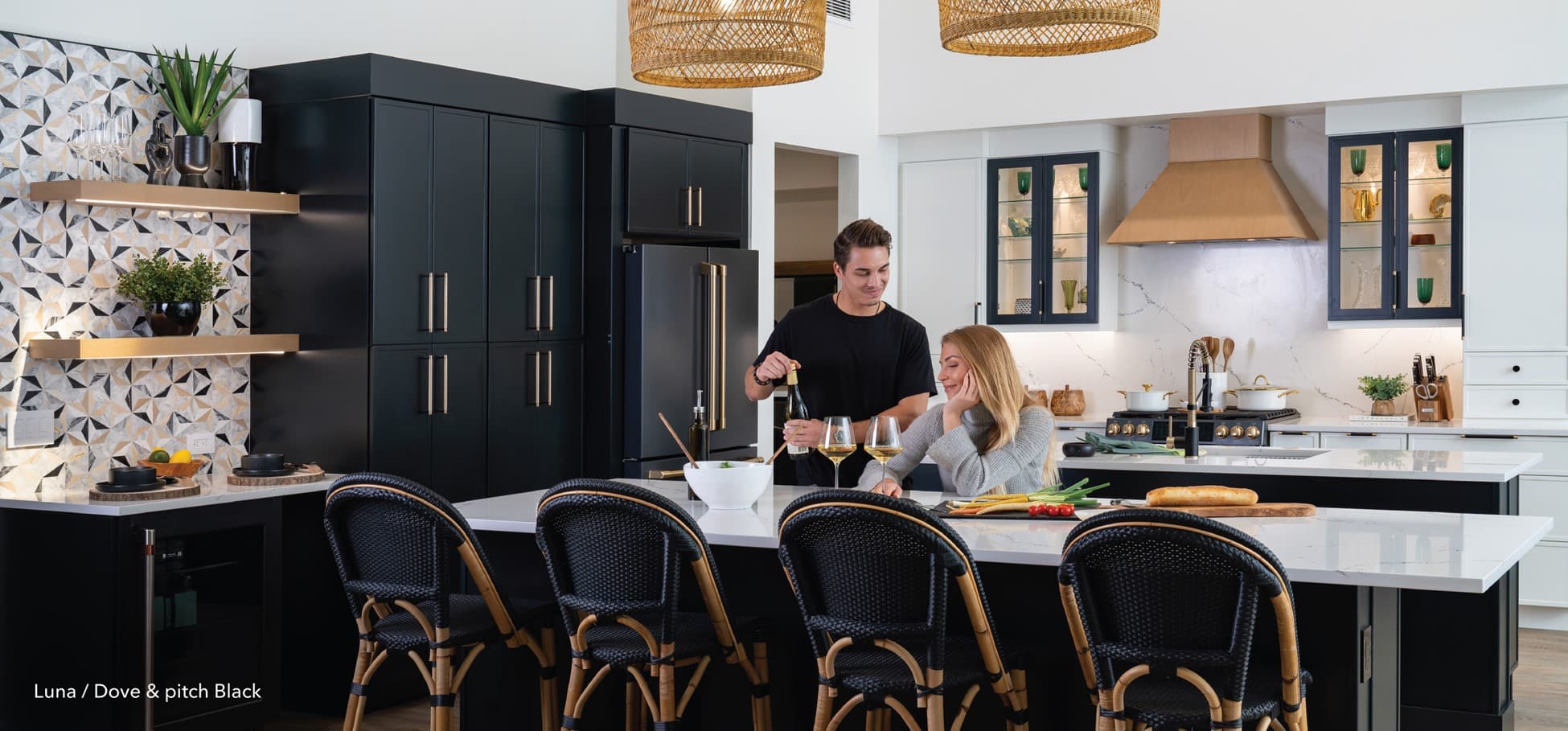
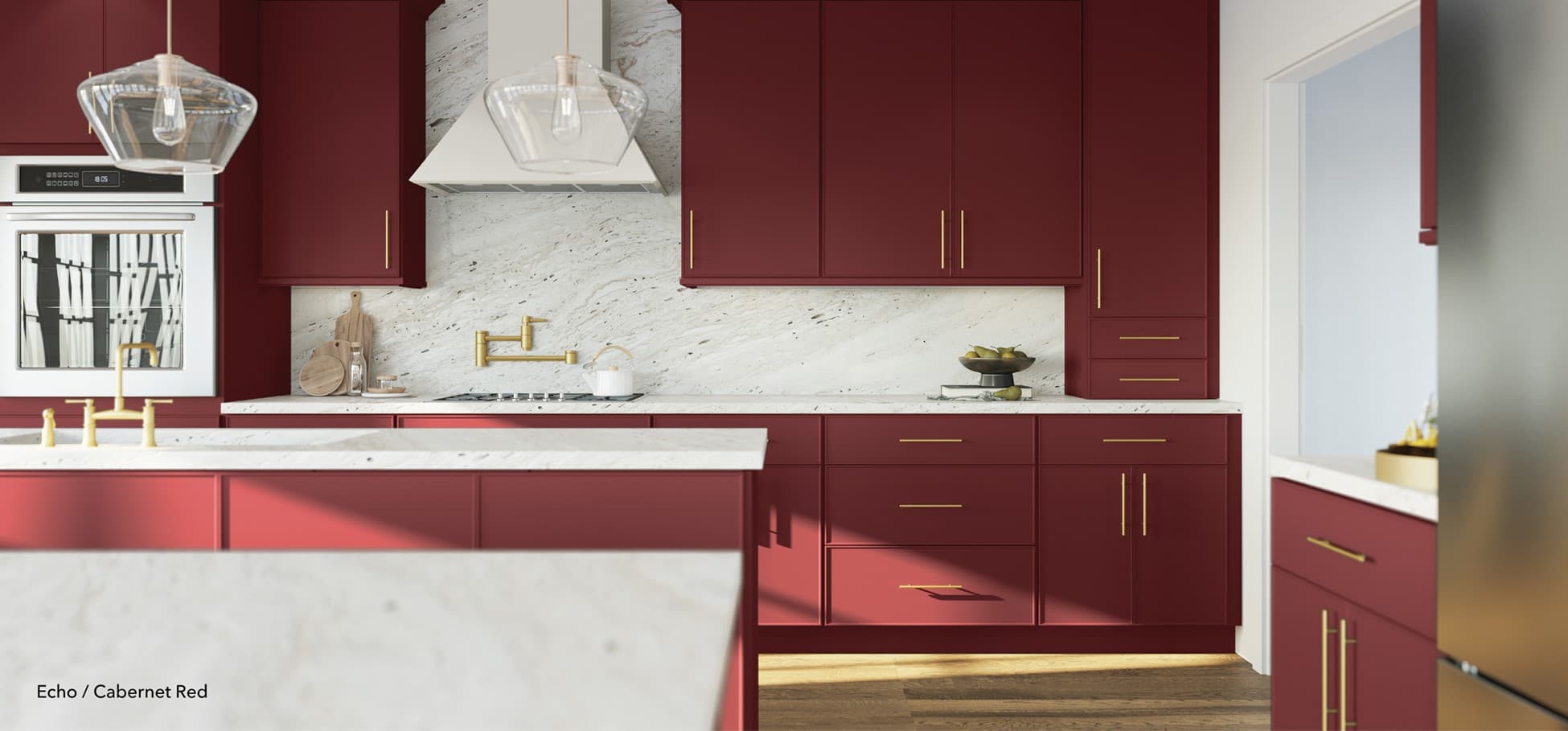
More luxurious materials were readily available as well, such as quartz and granite, and have been incorporated throughout kitchen styles. Stylish individualism is the way to go with kitchen design, whether it was a more minimal style, a white kitchen, or a darker look.

Conclusion
Kitchens have evolved drastically from their humble beginnings. Once upon a time they were small, hidden rooms used solely for preparing food, but as society progressed so did the kitchen space. Looking back to what kitchens used to be, and where they are now, we can certainly appreciate their journey and what they have become now.
What historic kitchen style was the most surprising? Let us know below!