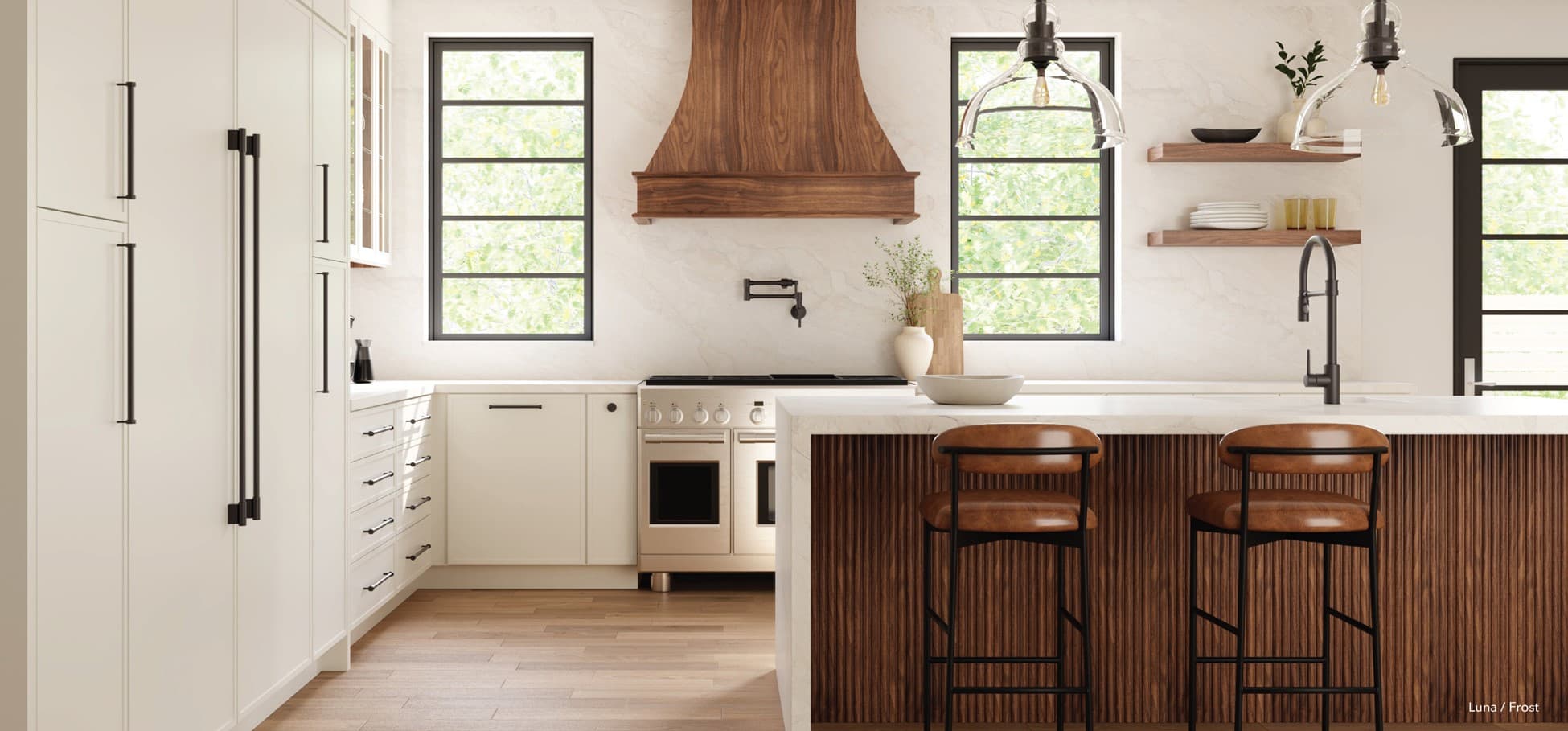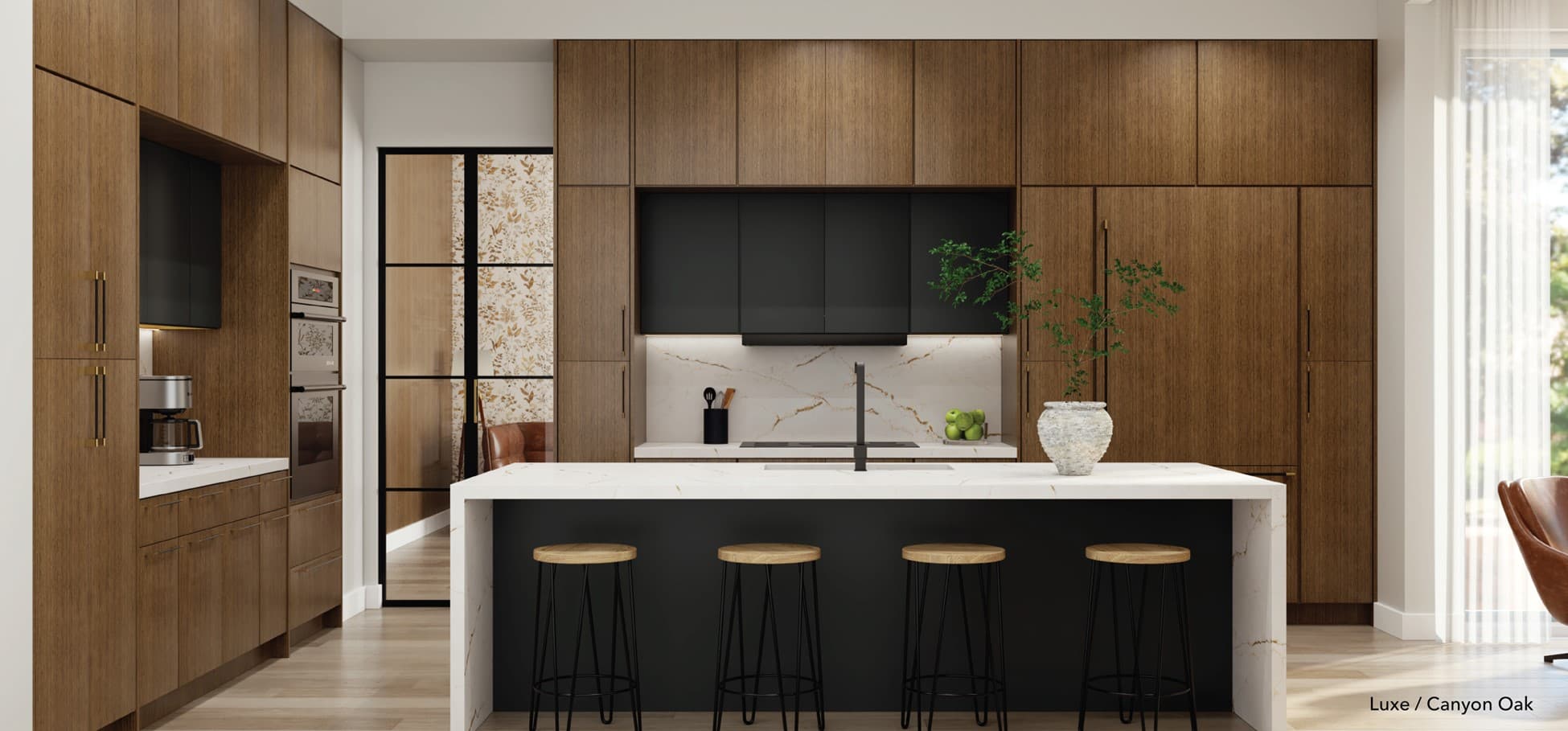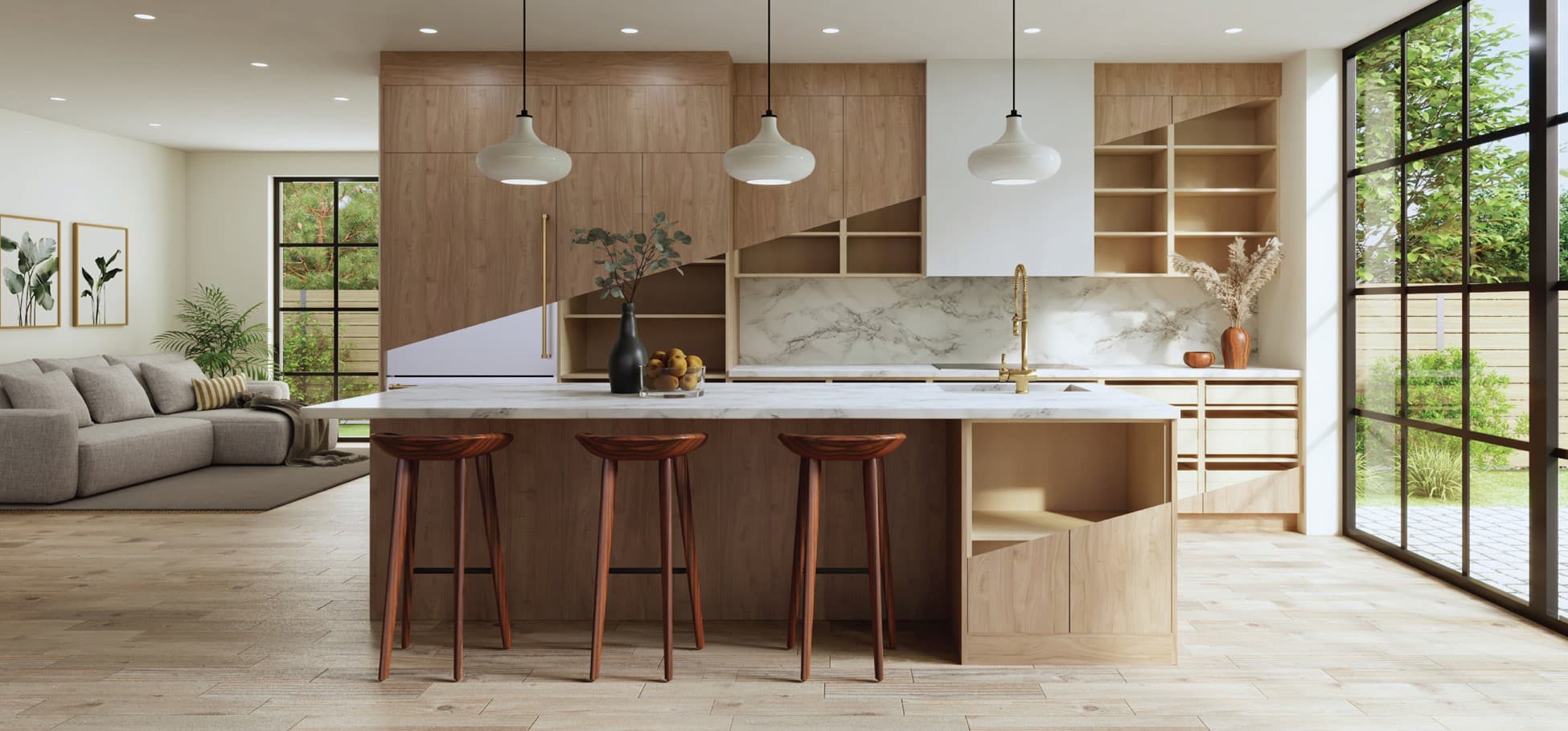
A practical comparison of appearance, durability, moisture resistance, and frameless performance.
Plywood is often treated as the automatic sign of a better cabinet. In reality, plywood and high quality particle board have different strengths. Either can produce a durable cabinet when the material is used as part of a well engineered system.
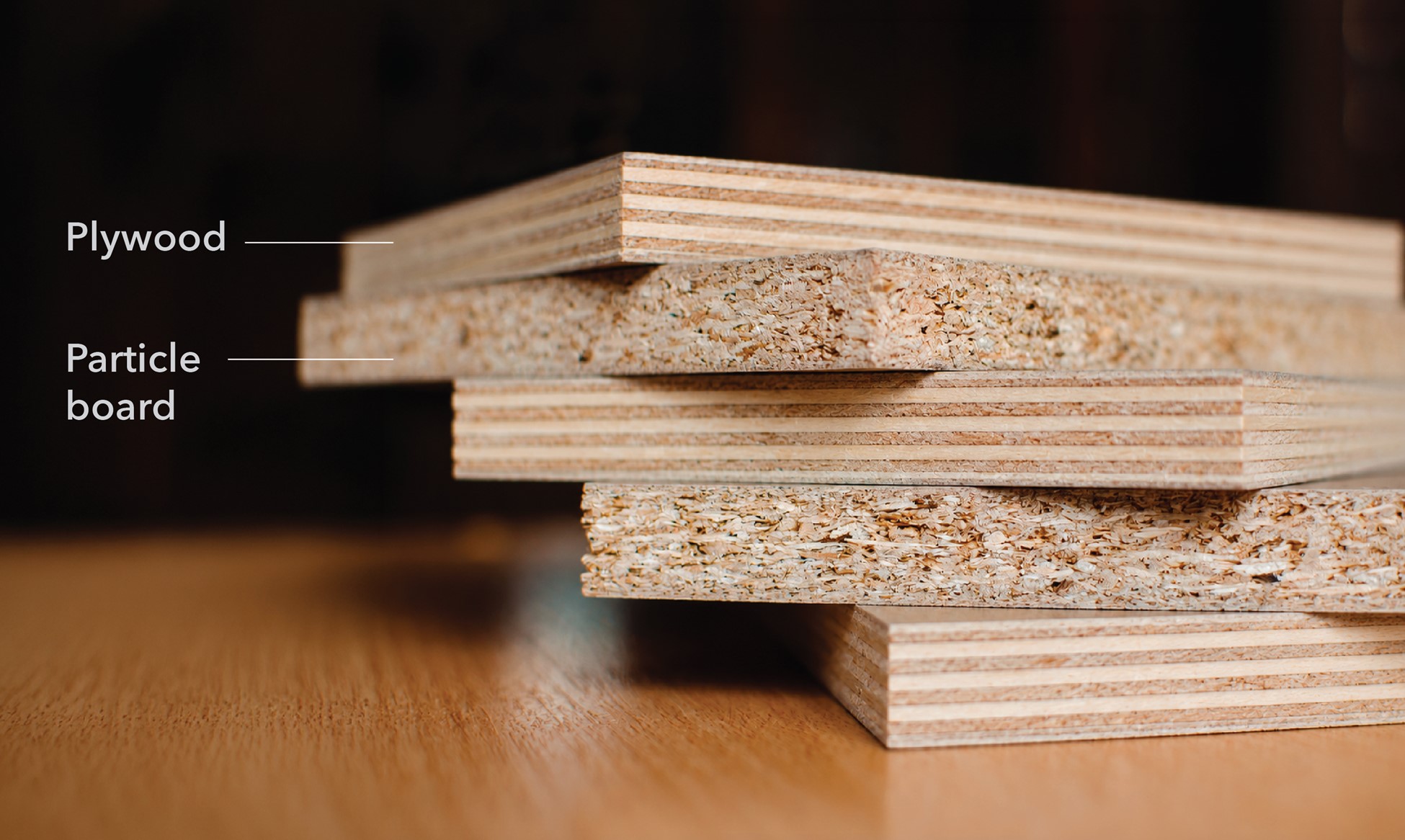
Plywood generally offers better fastening near panel edges and greater tolerance of accidental moisture. Cabinet grade particle board, also called engineered furniture board or EFB, offers a flatter, more uniform panel for precise machining and assembly.
What is the difference?
Plywood is made from alternating layers of wood veneer. Its layered construction adds strength and helps reduce splitting and movement.
Particle board is made from wood particles bonded under heat and pressure. Cabinet grade furniture board has a smooth, consistent surface that works well with decorative laminates. It should not be confused with thin particle board used in temporary furniture or with MDF, which is made from finer fibers.
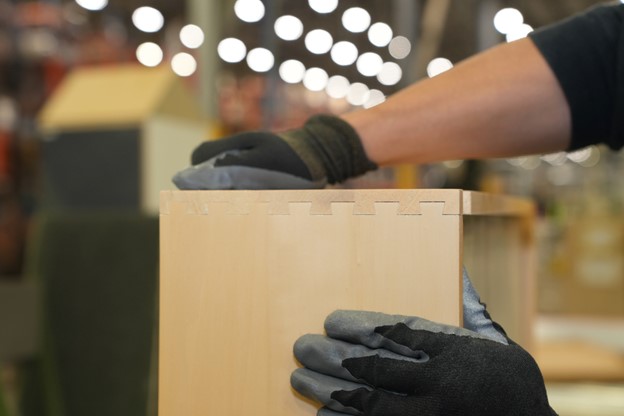
Why does furniture board work well in frameless cabinets?
In frameless cabinetry, doors and drawers attach directly to the cabinet box instead of a front frame. This creates wider openings and more accessible storage, but it also requires highly accurate construction.
Flat panels, uniform thickness, square joints, and precise machining help produce even door reveals and properly aligned drawers. Engineered furniture board’s consistency makes it especially effective in European style frameless construction. Properly engineered plywood can also make an excellent frameless cabinet.
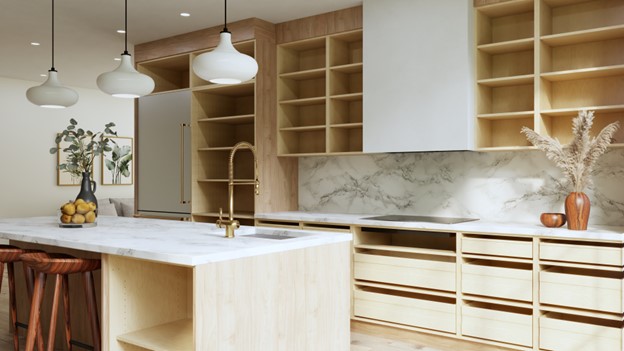
What does the difference look like at Fabuwood?
Illume uses European style frameless engineered furniture board construction. Its White Linen interior, Threespine® Click Technology, BLUM hinges, and BLUM MERIVOBOX drawers create a clean, precise system.
Ovela uses American style frameless plywood construction. It combines a natural veneered interior with a grooved back panel, solid wood dovetail drawers, BLUM hardware, and a built in recessed toe kick.
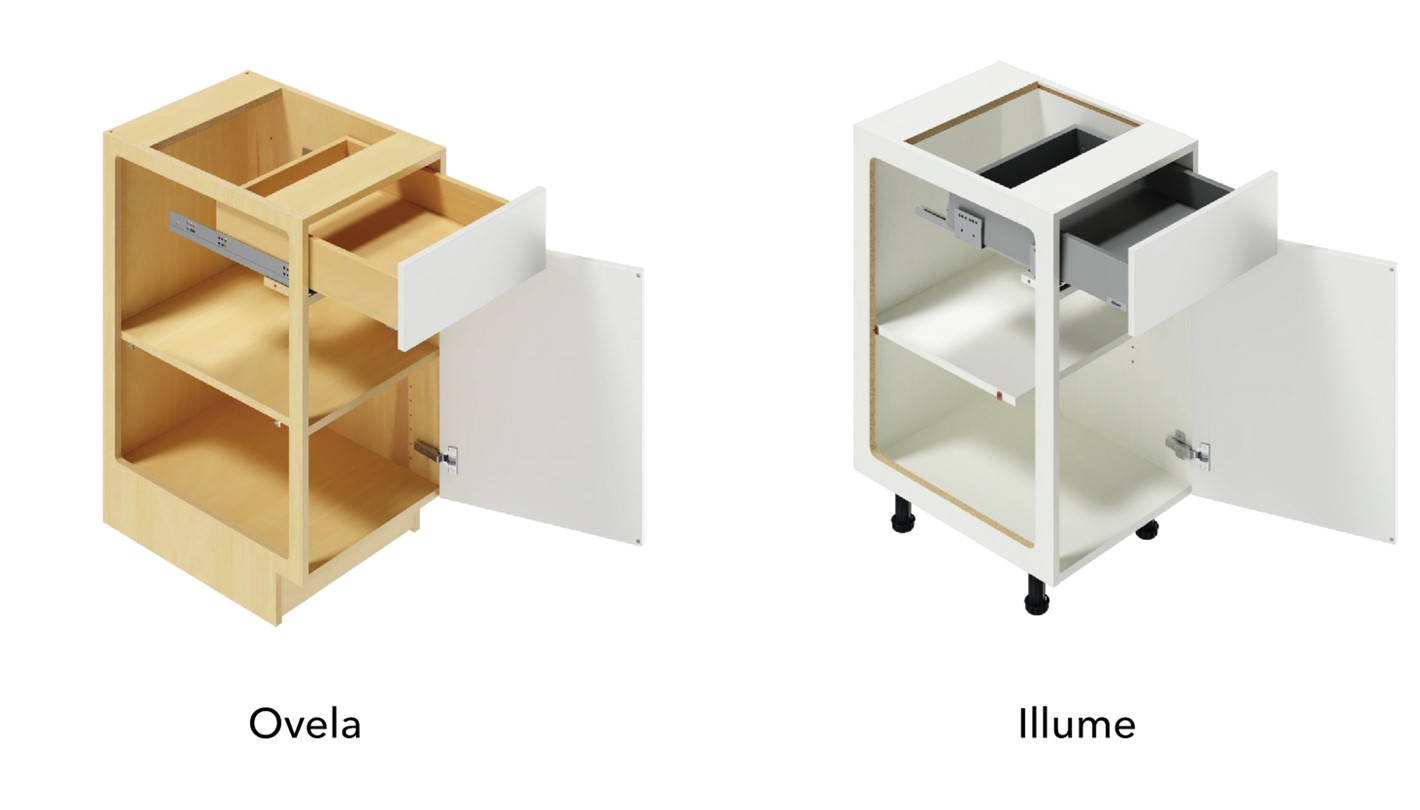
Both offer full access frameless function and can use Catalina and Tuscany door styles. From the outside, the material may not change the kitchen’s overall appearance. The difference is most visible inside: Illume is clean and consistent, while Ovela brings the natural warmth of wood.
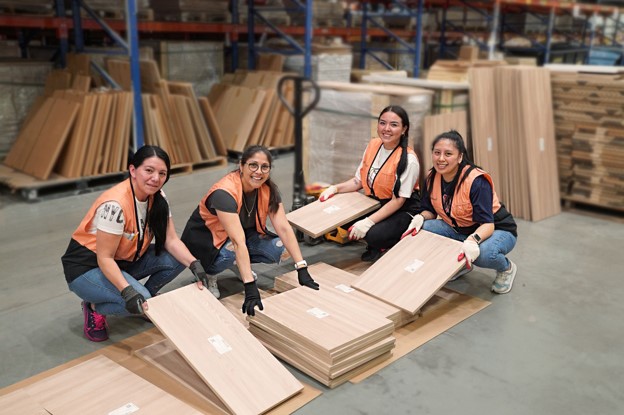
Which should you choose?
Choose plywood when a natural interior, lower weight, stronger edge fastening, or greater moisture tolerance matters most. Climate should also be considered. Excessive humidity and extreme temperature changes can affect cabinet materials, making year round environmental control important for either construction
Consider engineered furniture board when the project calls for precise European style frameless construction, a consistent laminated interior, and strong value.
The material is only one part of the cabinet's quality. Panel thickness, joinery, edge protection, hardware, finish, installation, and care also affect long term performance. Neither material is waterproof, and Fabuwood recommends drying excess water immediately.
Compare Fabuwood cabinet series to find the right construction for your project.