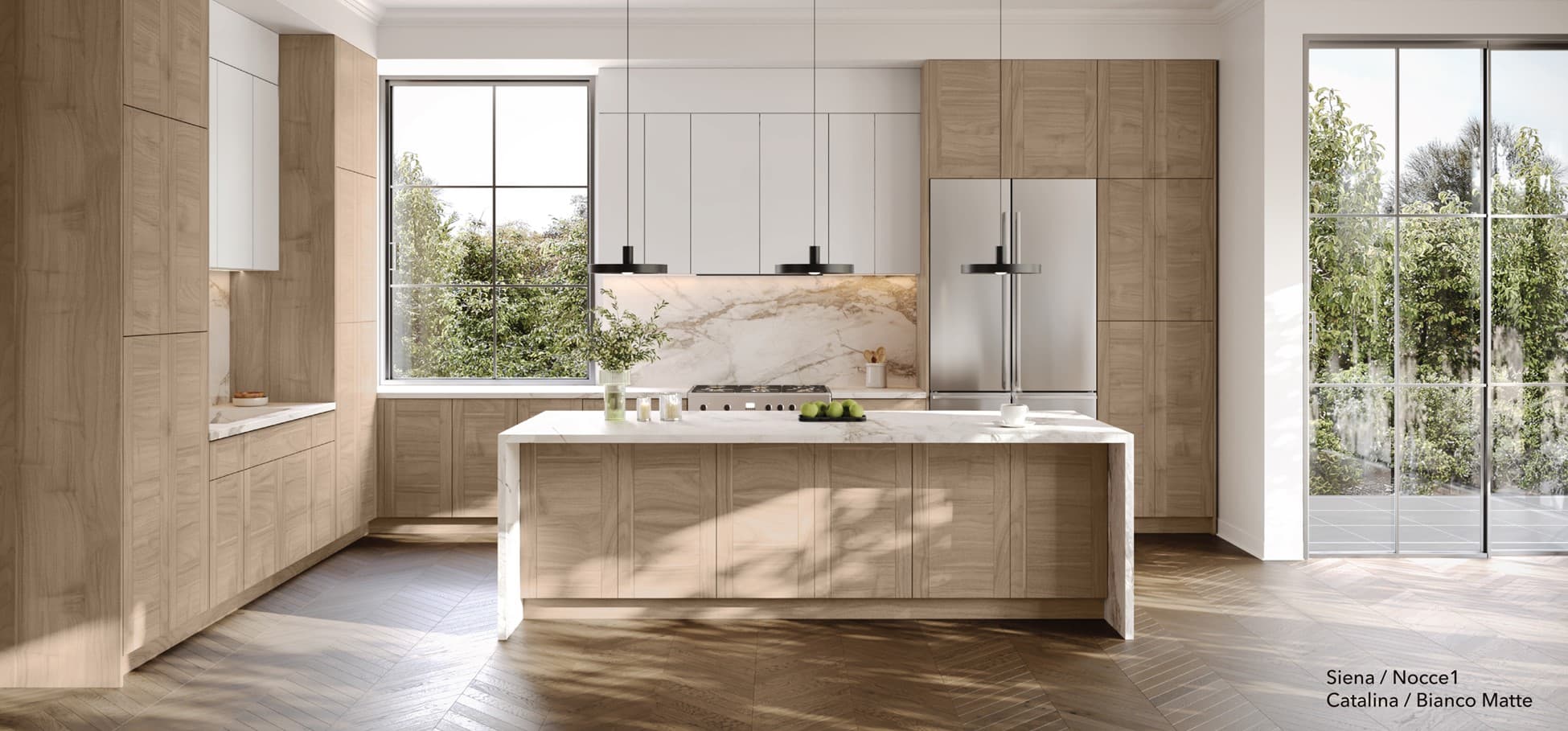
A new door style for frameless kitchen cabinets, with grain running both vertically and horizontally, 23 textured finishes, and zero applied trim.
The Italians have a word for the quality everybody wants and nobody can fake: sprezzatura. It means making the difficult look easy, a cable-knit sweater tossed over the shoulders, an espresso finished without checking the time. The effect feels spontaneous when, in fact, every millimeter was considered.
Kitchens are where this gets difficult. You want a calm space, so you choose flat slab doors and handle-free cabinetry. Then the room starts to feel cold or empty, and the usual rescue begins: molding here, a reeded panel there, an accessory on the counter, perhaps a bowl of lemons for good measure. People get creative.
Siena, Fabuwood’s new door style for frameless kitchen cabinets, takes the Italian route instead. Its clean profile, directional grain, and tactile finish give the cabinetry personality without relying on applied trim or ornamental detail.
What makes Siena different from a traditional slab door?
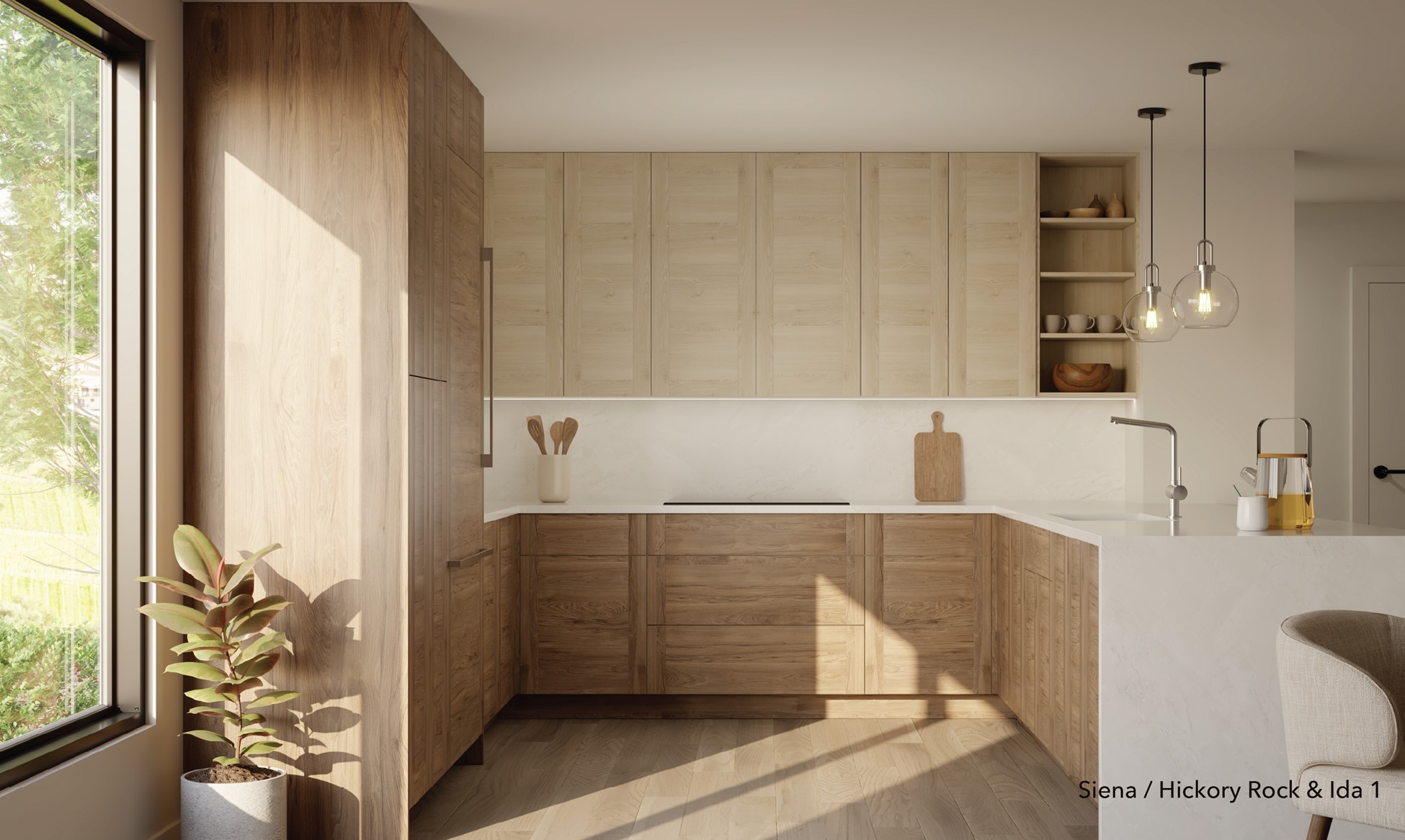
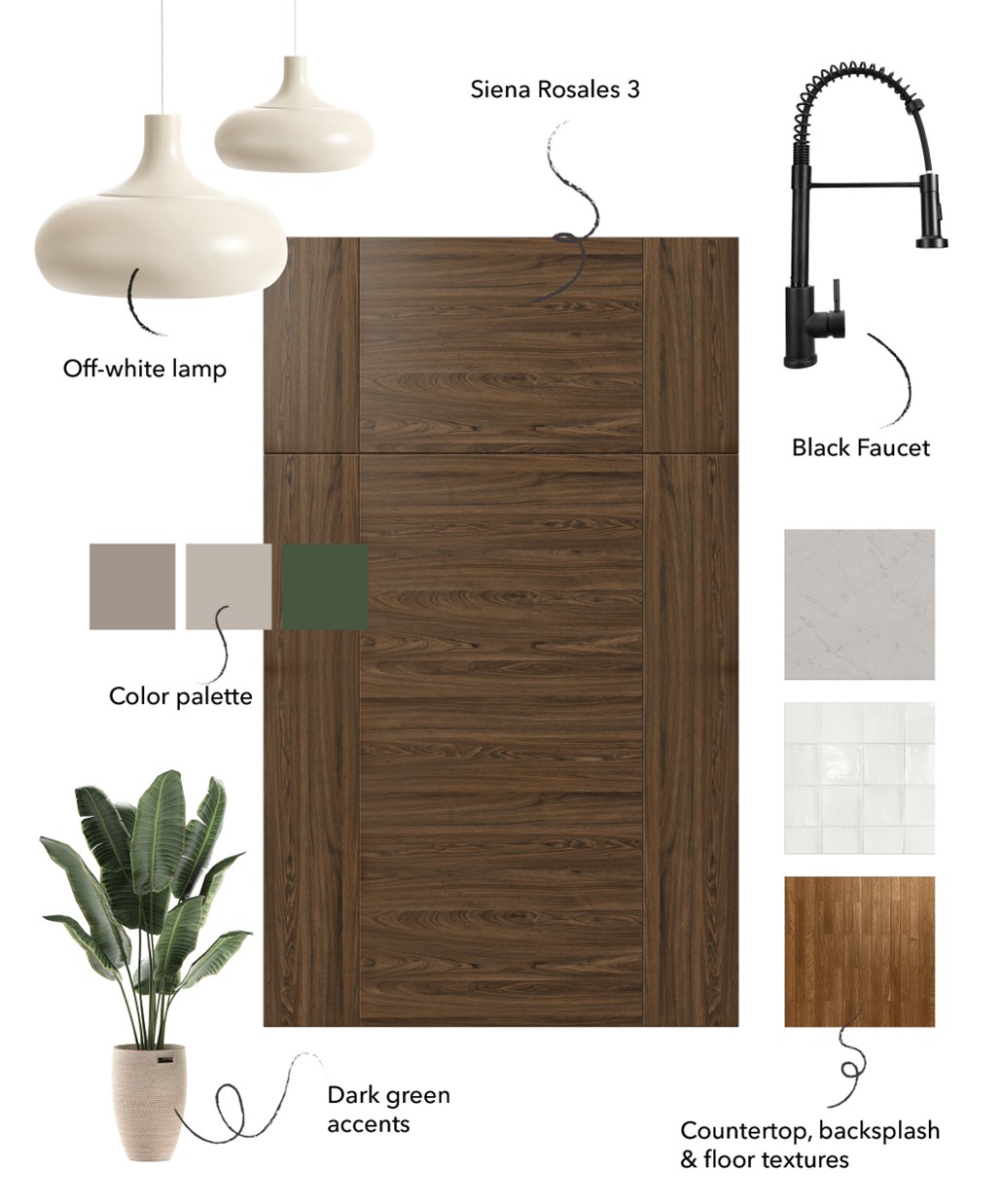
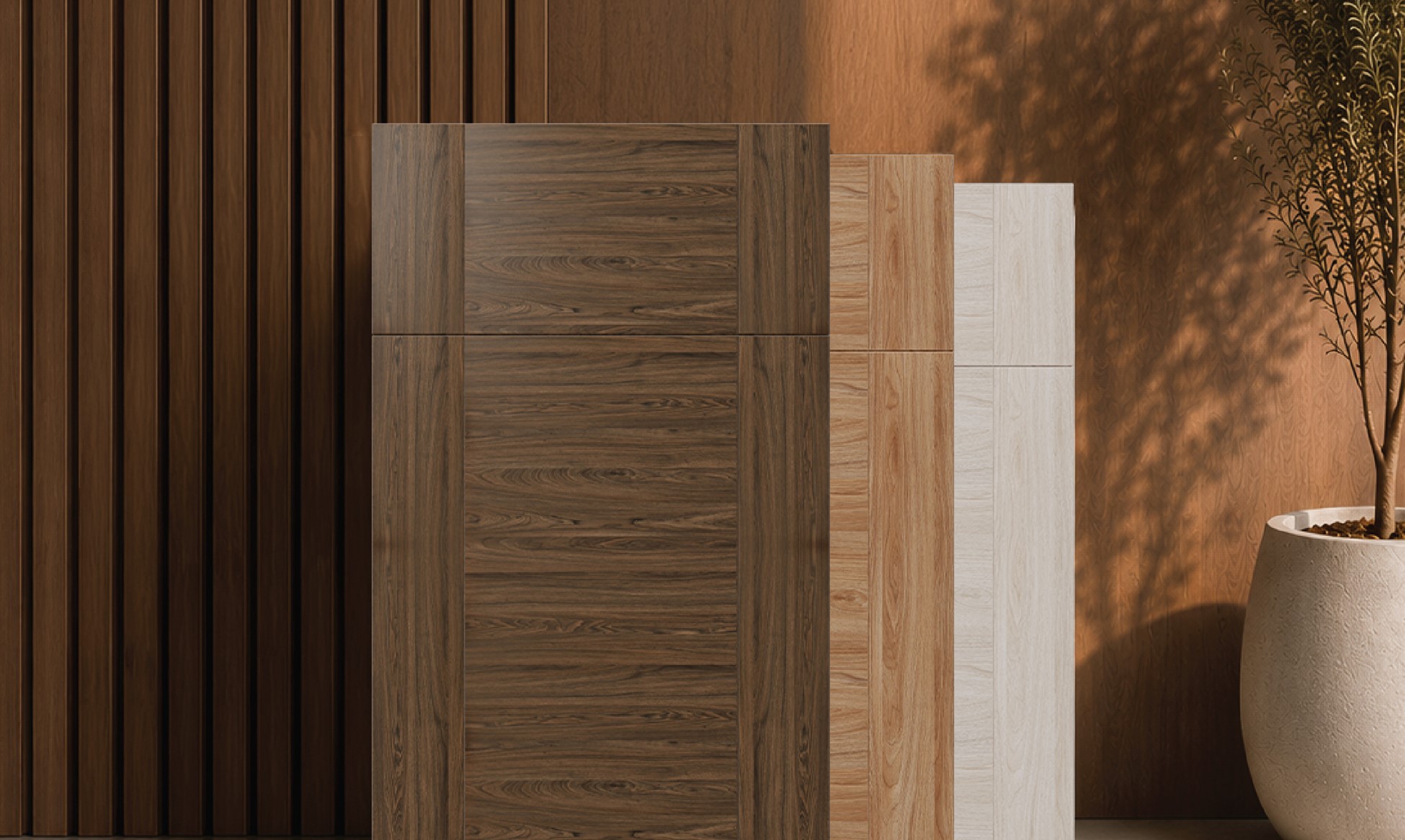
A traditional flat slab cabinet door creates one smooth, uninterrupted plane. Siena keeps that clean geometry but introduces another layer: the grain runs vertically and horizontally across the design.
Vertical grain emphasizes height. Horizontal grain draws the eye across a run of cabinetry and makes it feel broader and more continuous. Used together, the two directions create rhythm and movement, turning a full wall of cabinetry into an architectural feature.
See it here:
“The emphasis on continuous vertical and horizontal grain reinforces that idea, allowing the cabinetry to become an architectural element rather than just storage.”
—Kerrie Kelly, Creative Director at Fabuwood
Siena does not add more to the door. It makes more of the surface already there.
What are frameless kitchen cabinets?
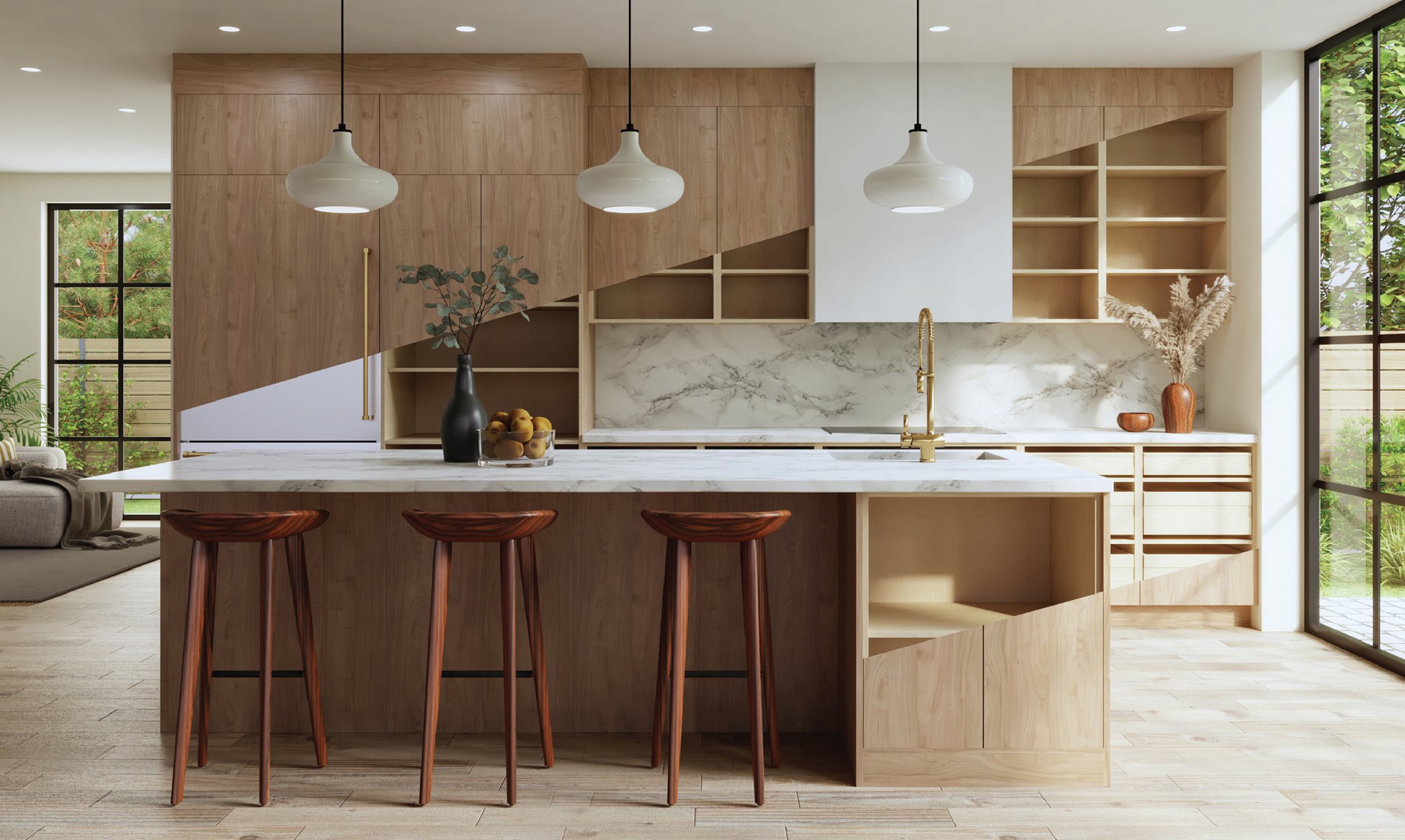
Unlike framed cabinetry, which has a face frame attached to the front of the cabinet box, frameless construction attaches the doors directly to the box. This creates a cleaner exterior and fuller access to the cabinet interior.
Frameless construction is often associated with European kitchen cabinets, and its uninterrupted lines are one reason it works so naturally in modern kitchen cabinets.
Siena is compatible with two Fabuwood frameless collections:
Illume features European-style frameless construction, engineered furniture board, white linen-finished interiors, and BLUM MERIVOBOX metal drawers.
Ovela combines American-style frameless construction with plywood cabinet boxes, veneered natural wood interiors, and solid wood dovetail drawers.
Both provide the clean, full-access foundation that allows Siena’s grain pattern to remain the focus.
Why textured minimalist kitchen cabinets feel warmer
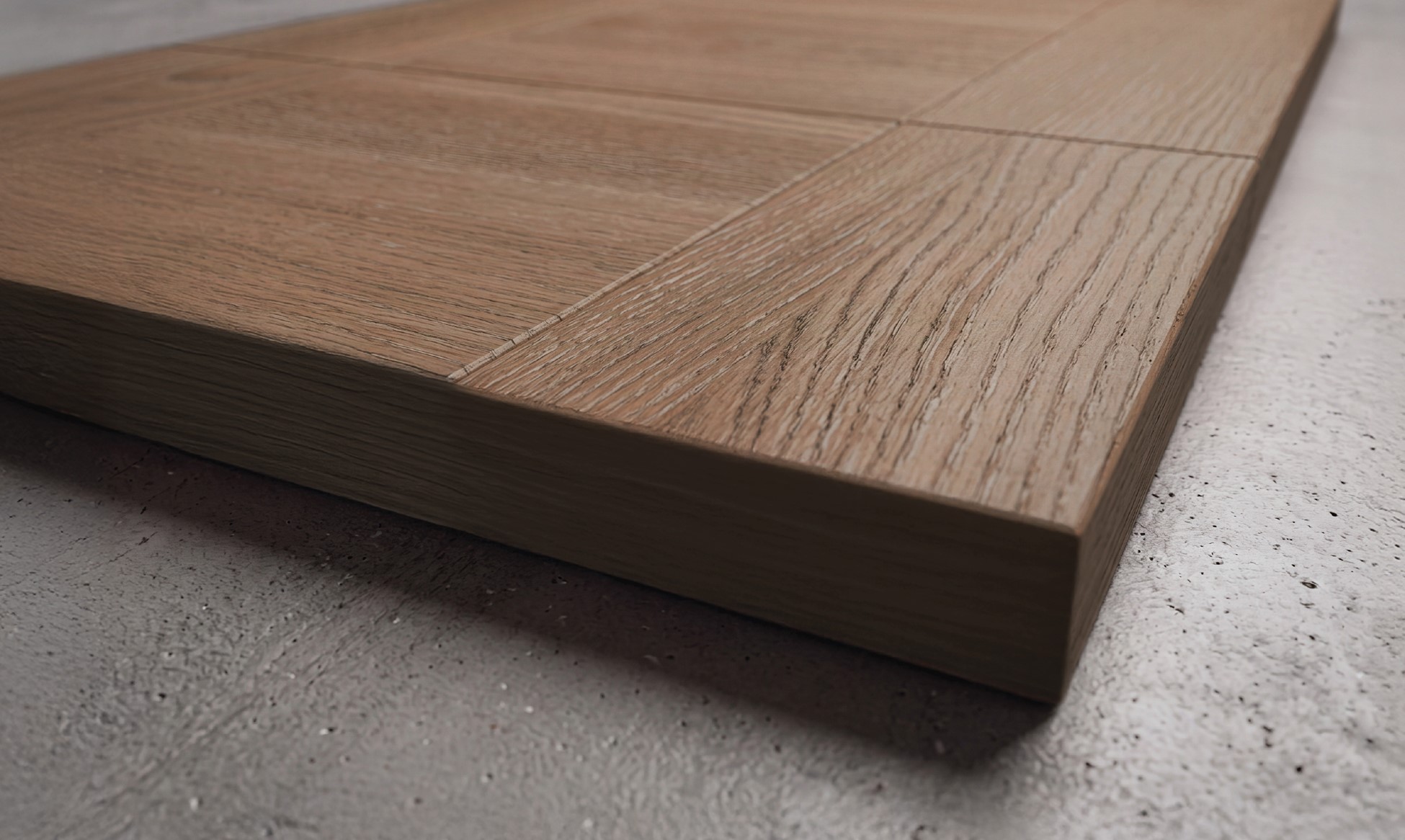
Minimalist kitchen cabinets remove visual noise, but they still need something to keep the room from feeling sterile. Siena creates that warmth through texture rather than ornamentation.
Kerrie sees the door style as an answer to a shift that has been building in homes for several years.
“Designers and homeowners are moving away from spaces that feel overly decorated and toward interiors that feel calm, tactile, and connected to nature.”
Much of that influence comes from European kitchens and boutique hotels, where clean lines and honest materials have never been a passing trend. As homes borrow more from hospitality and wellness spaces, the preference is shifting from decorative layers to surfaces with depth.
It is the same instinct behind the wood tones and mineral-inspired colors in the Designer Stain Collection: people want to experience the material itself, not simply the decoration placed over it.
Kerrie describes Siena’s texture in a way that is difficult to unsee:
“The uninterrupted grain has a rhythm that feels handcrafted, almost textile-like, bringing movement and warmth without relying on ornamentation.”
Woven linen, translated into cabinetry.
Design has been moving in this direction
The NKBA 2026 Kitchen Trends Report surveyed 634 industry professionals. It found that 69% expect flat slab cabinet doors to grow in popularity, while 59% identified wood grain as a growing preference. White oak led among wood species at 51%.
Milan reached a similar conclusion from another direction. The official EuroCucina 2026 recap highlighted a renewed desire for real surfaces, deep textures, and materials that are pleasurable to touch. Minimalism is becoming warmer, more sensory, and more emotionally connected to the home.
At the same time, designers are becoming more selective about how texture is used. Homes & Gardens reported that fully fluted cabinetry can feel overdone when it appears across every door, hood, and island. Livingetc noted the broader move toward sculptural timber, expressive veneers, and surfaces with visible craftsmanship.
The direction is clear: texture is staying. It is simply becoming more thoughtful.
Which styles and spaces work best with Siena?
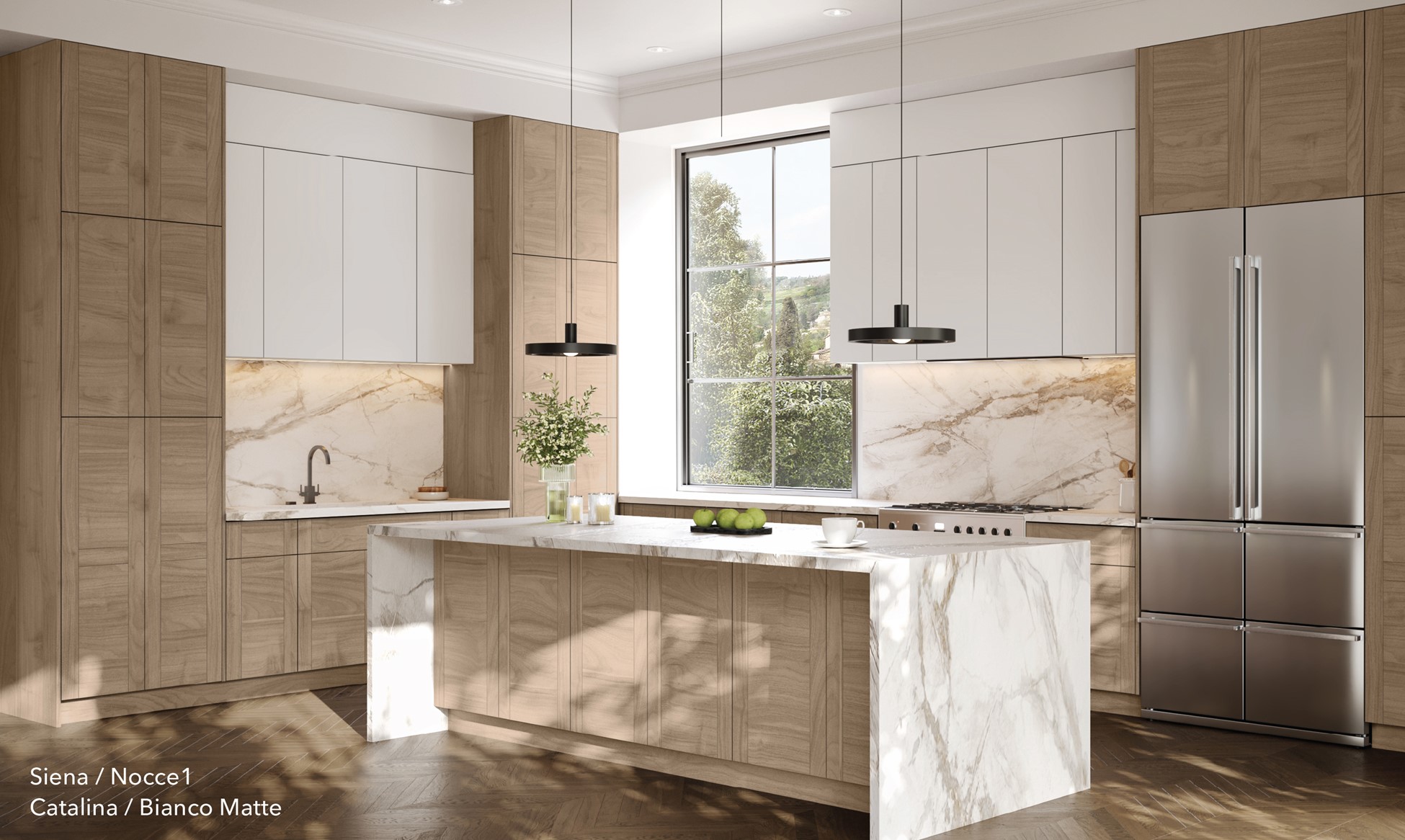
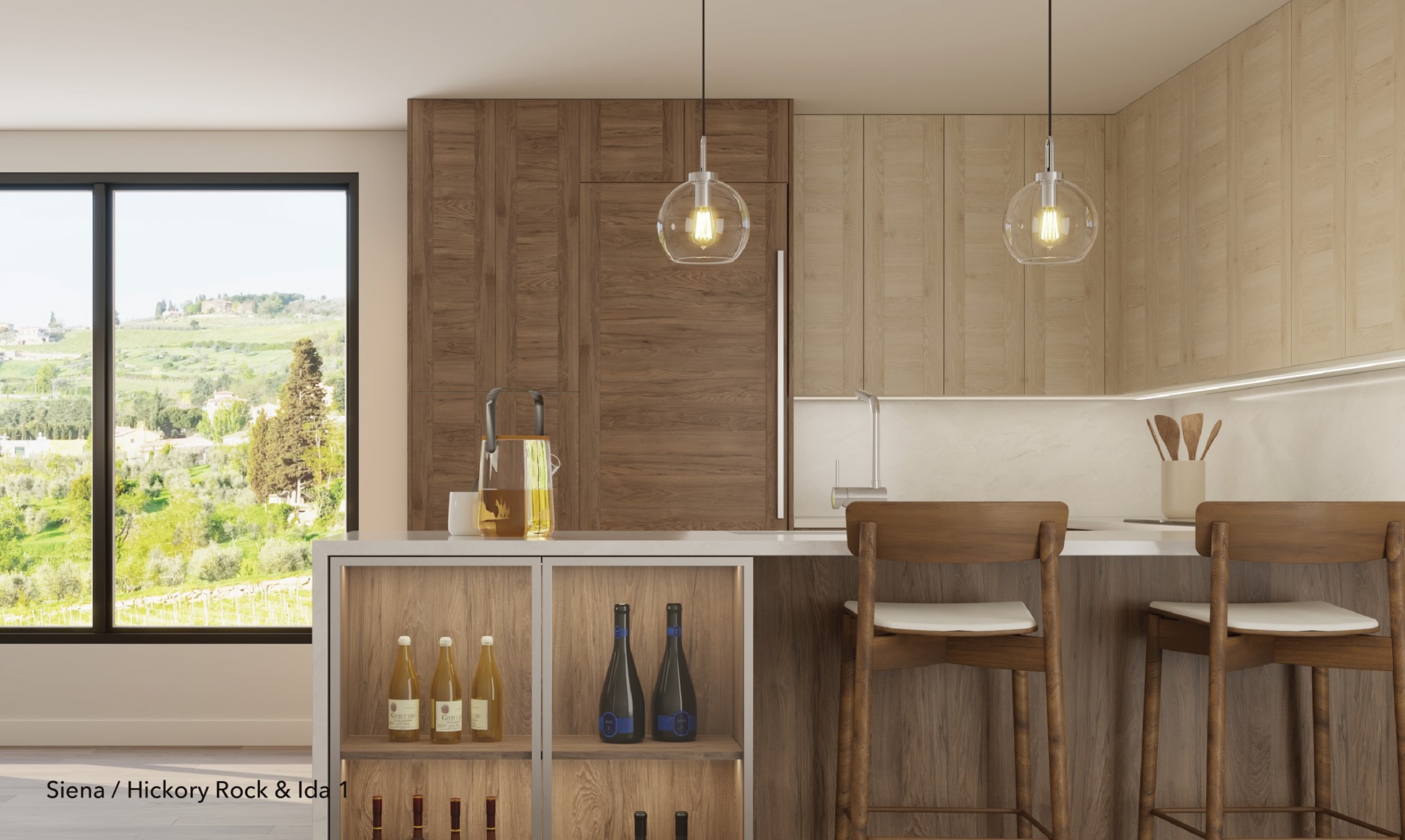
Siena works especially well in Organic Modern, Japandi, Scandinavian, and Contemporary interiors. In a minimalist kitchen, it creates a quiet focal point. In a transitional room, it becomes a warm, textural backdrop.
Its clean geometry also makes Siena a natural choice for contemporary kitchen cabinets, but its use extends far beyond one design category—or even one room. Siena can be used in kitchens, bathrooms, vanities, bars, pantries, laundry rooms, home offices, and built-ins.
It can also be paired with a smooth Catalina slab. Use Siena on tall cabinetry or an island where you want more movement, then bring in Catalina on wall cabinets for a quieter counterpoint.
Kerrie recommends pairing Siena with “rift-cut woods, natural oak, walnut, limestone, travertine, quartzite, handmade tile, unlacquered brass, bronze, blackened steel, textured glass, woven materials, linen, bouclé, and soft matte finishes.”
Her read on why these combinations feel so relevant now is simple: “In a world filled with constant stimulation, people are looking for homes that feel restorative.”
What to know before choosing Siena
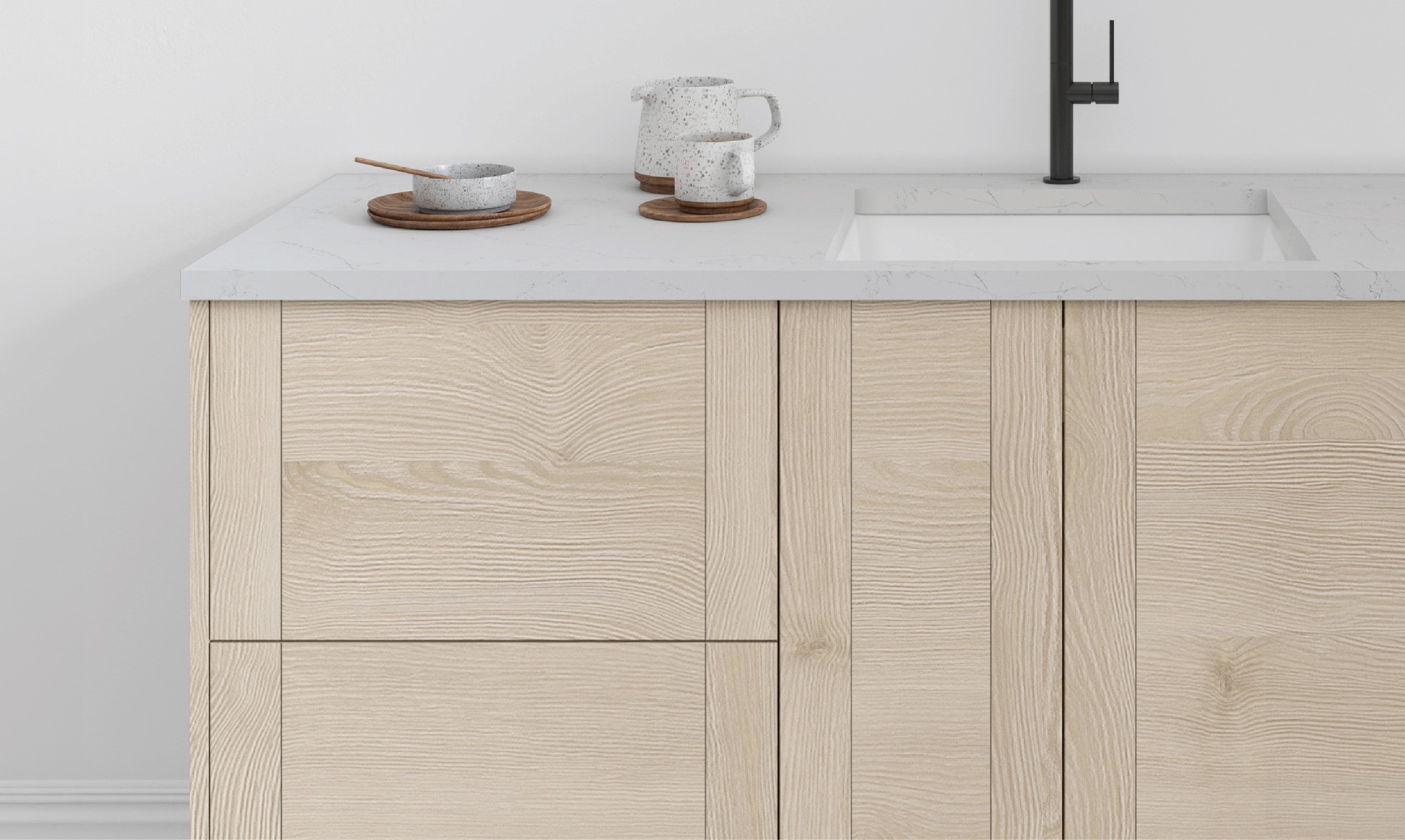
Siena is offered exclusively in 23 textured finishes, including Nocce 3, Como Ash 2, Clubhouse Oak, Ferrera Oak, Hickory Rock, Natural Elm, Silk Flow, Ida 2, and Frappe. It is available for Illume and Ovela and ships within the standard lead time.
Explore the complete finish range in the style guide, then place Siena into a floor plan using Fabuwood’s 3D kitchen planner.
A photograph can show the color and direction of the grain. It cannot fully capture the texture, the way the surface changes between morning and evening light, or how it feels beneath your hand. That is why it is worth seeing a sample before choosing a textured cabinet finish.
Effortless is a look. It is never an accident.
Sprezzatura, on a standard lead time. Order a sample door and see how Siena moves in your own light.