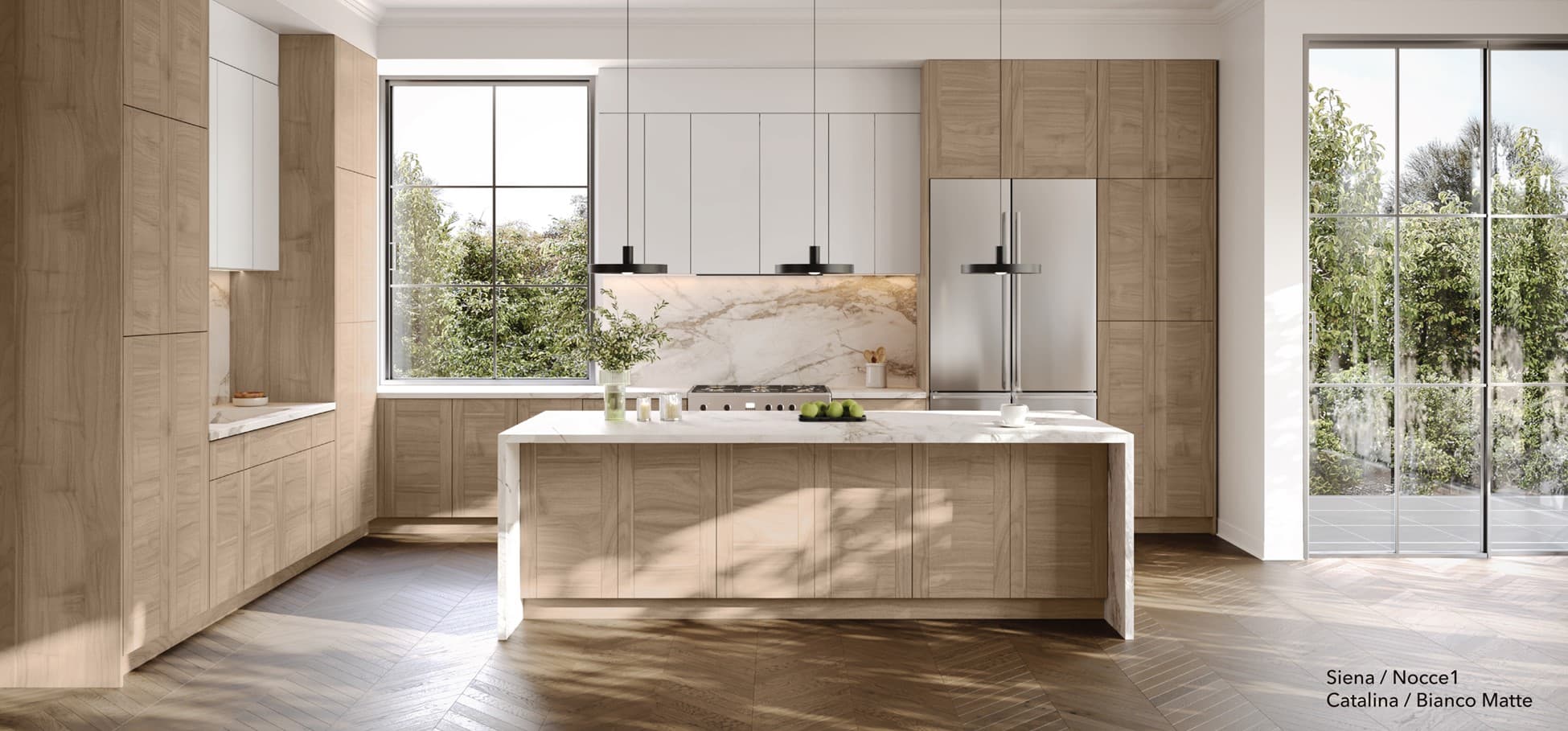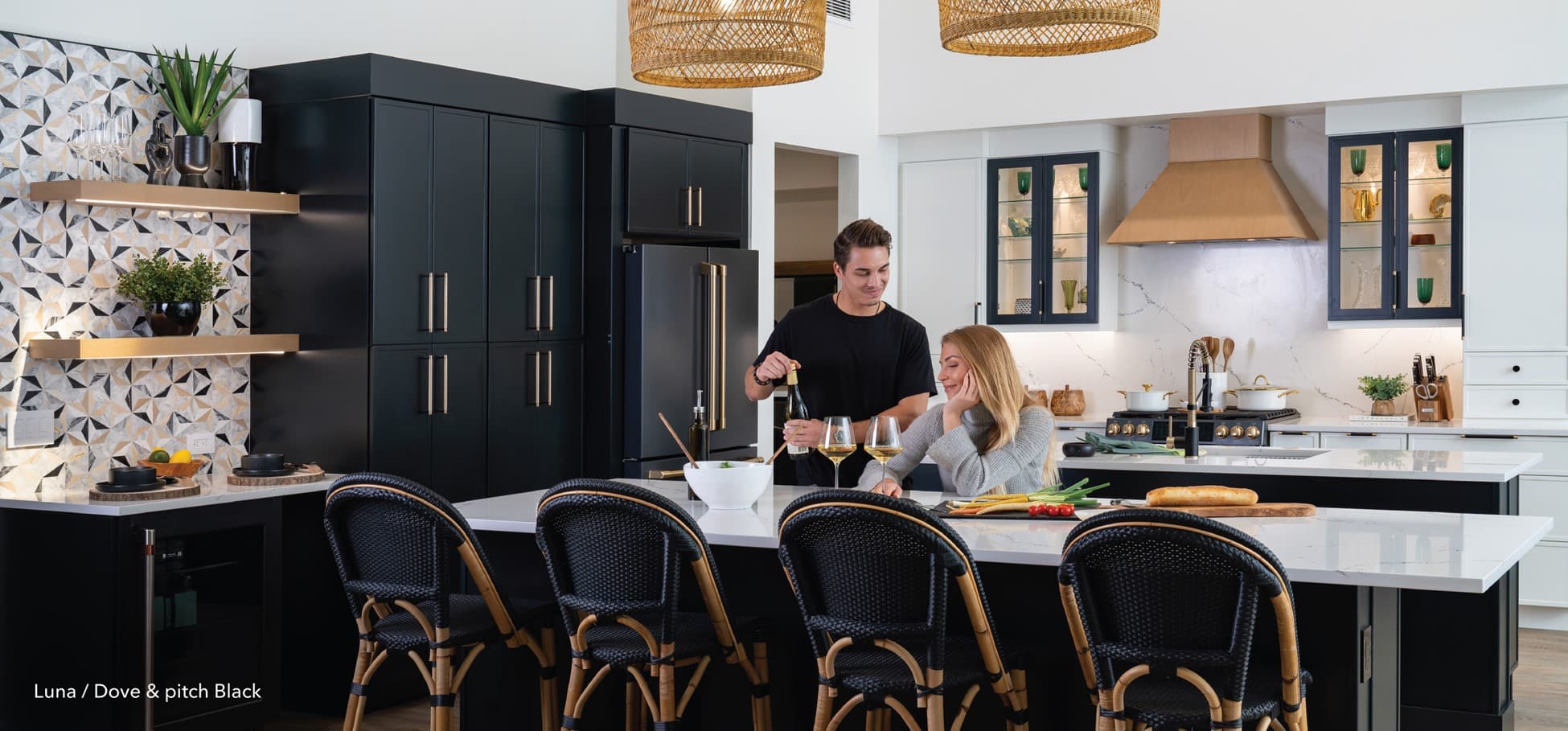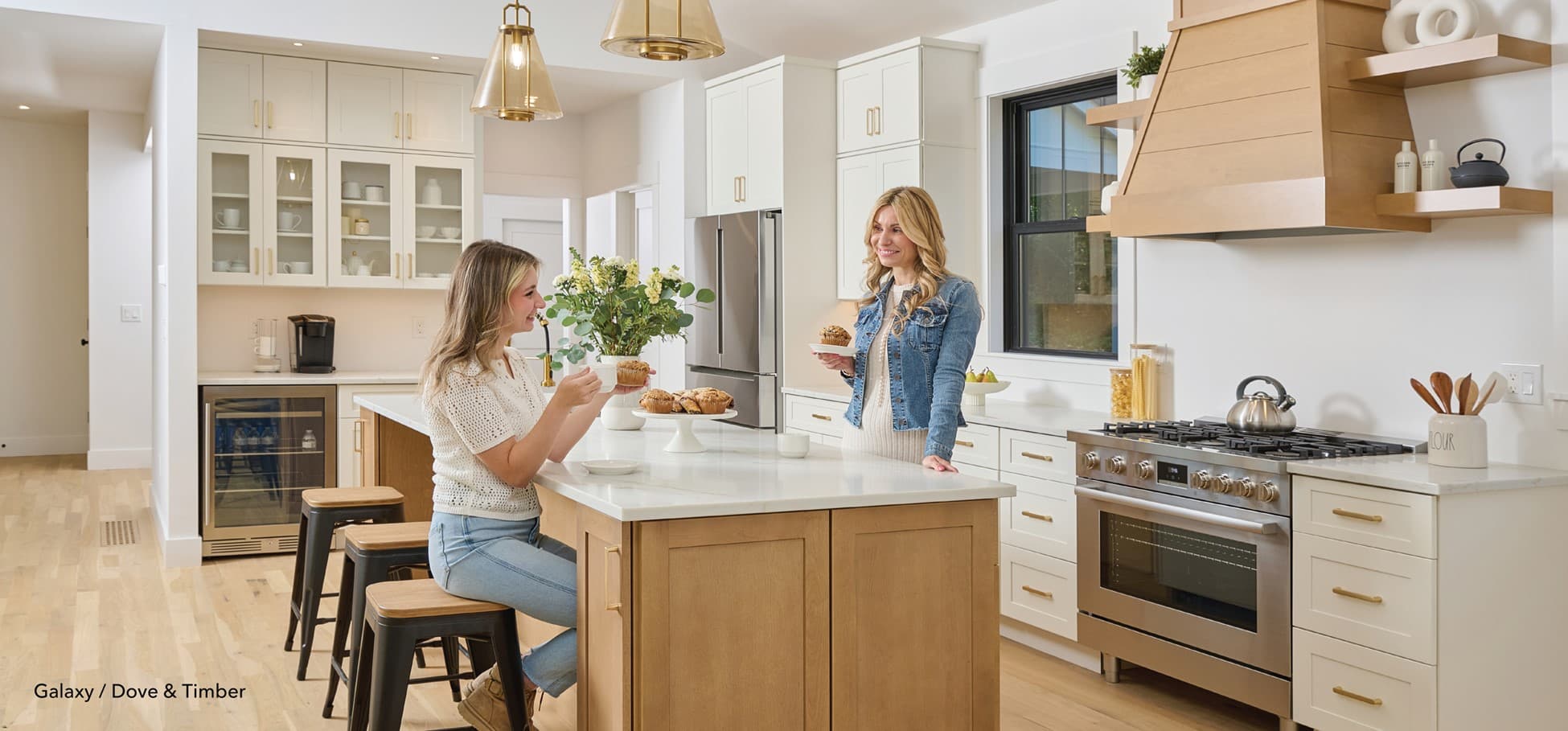
Two tone kitchens are having a very good second act. What began as white uppers and dark lowers has become a more layered mix of paint, stain, wood grain and texture.
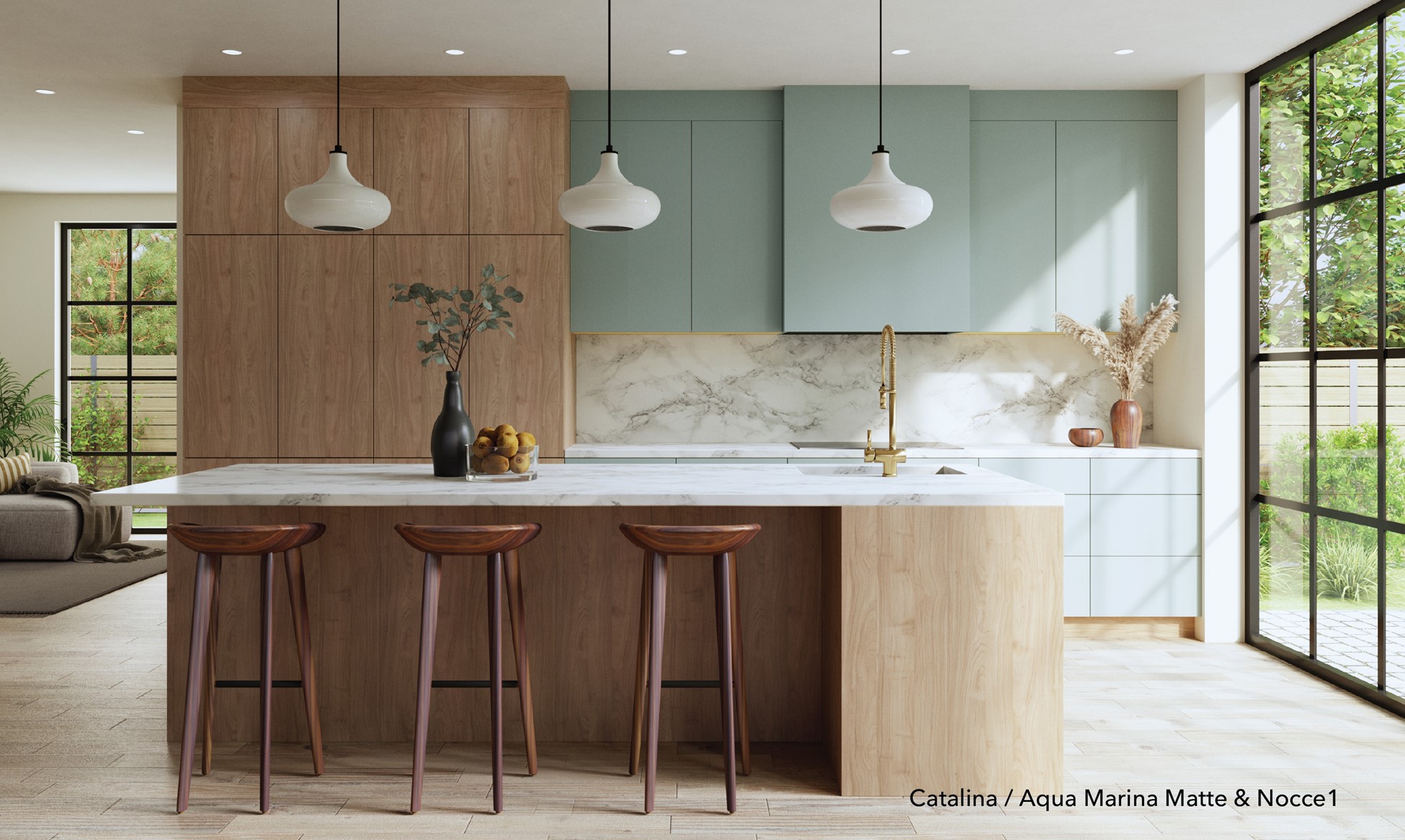
That evolution feels especially relevant in 2026. Architectural Digest identified color blocking as a defining design direction, while Vogue's 2026 interiors report points to earthy paint colors and characterful woods. Even the Pinterest Palette has moved toward Cool Blue, Plum Noir and Jade.
Two tone is no longer just a trend. It is a practical way to create contrast, define zones and give a kitchen a point of view.
Use this guide when choosing two tone cabinets for your kitchen.
What are two tone cabinets?
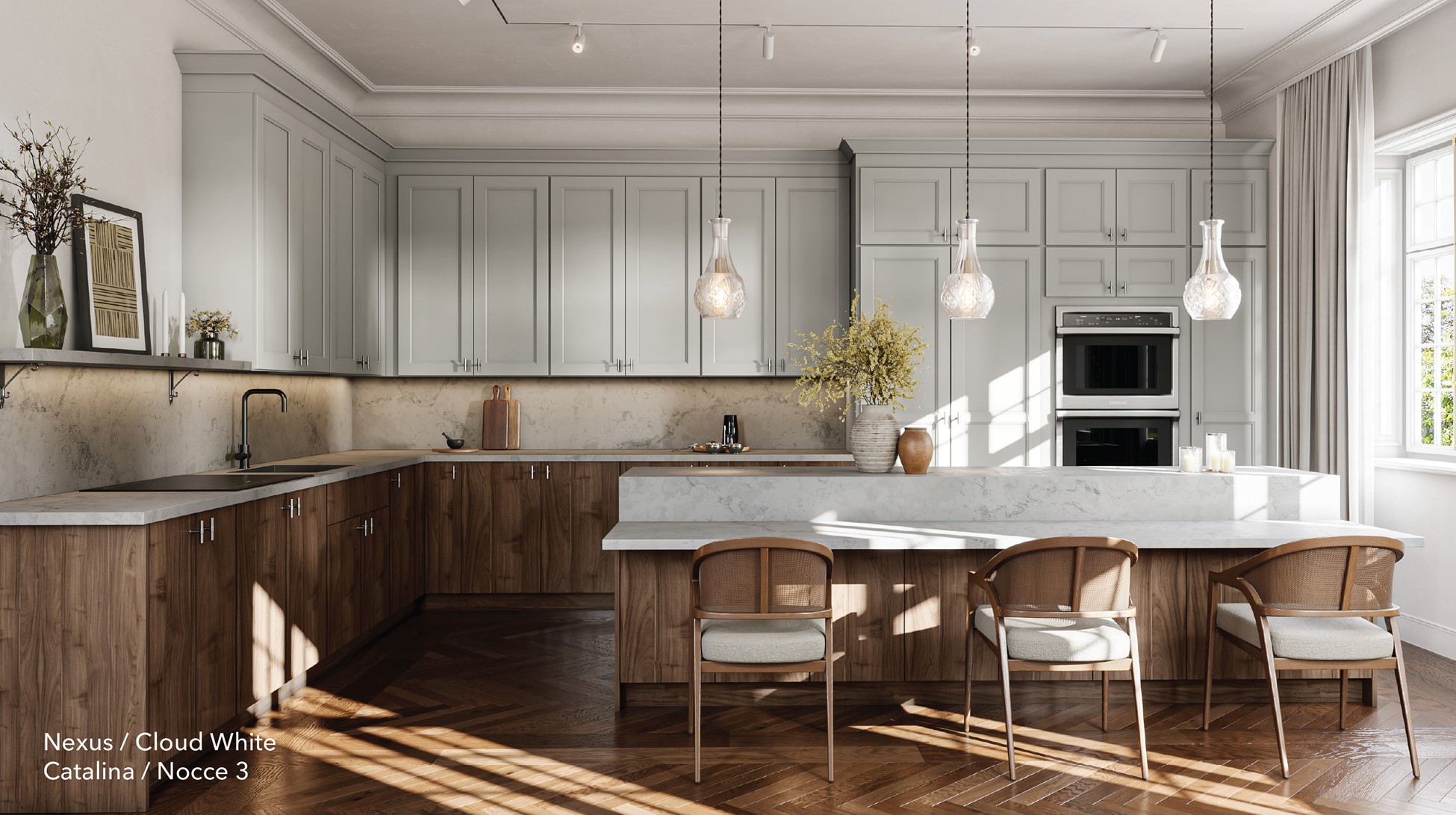
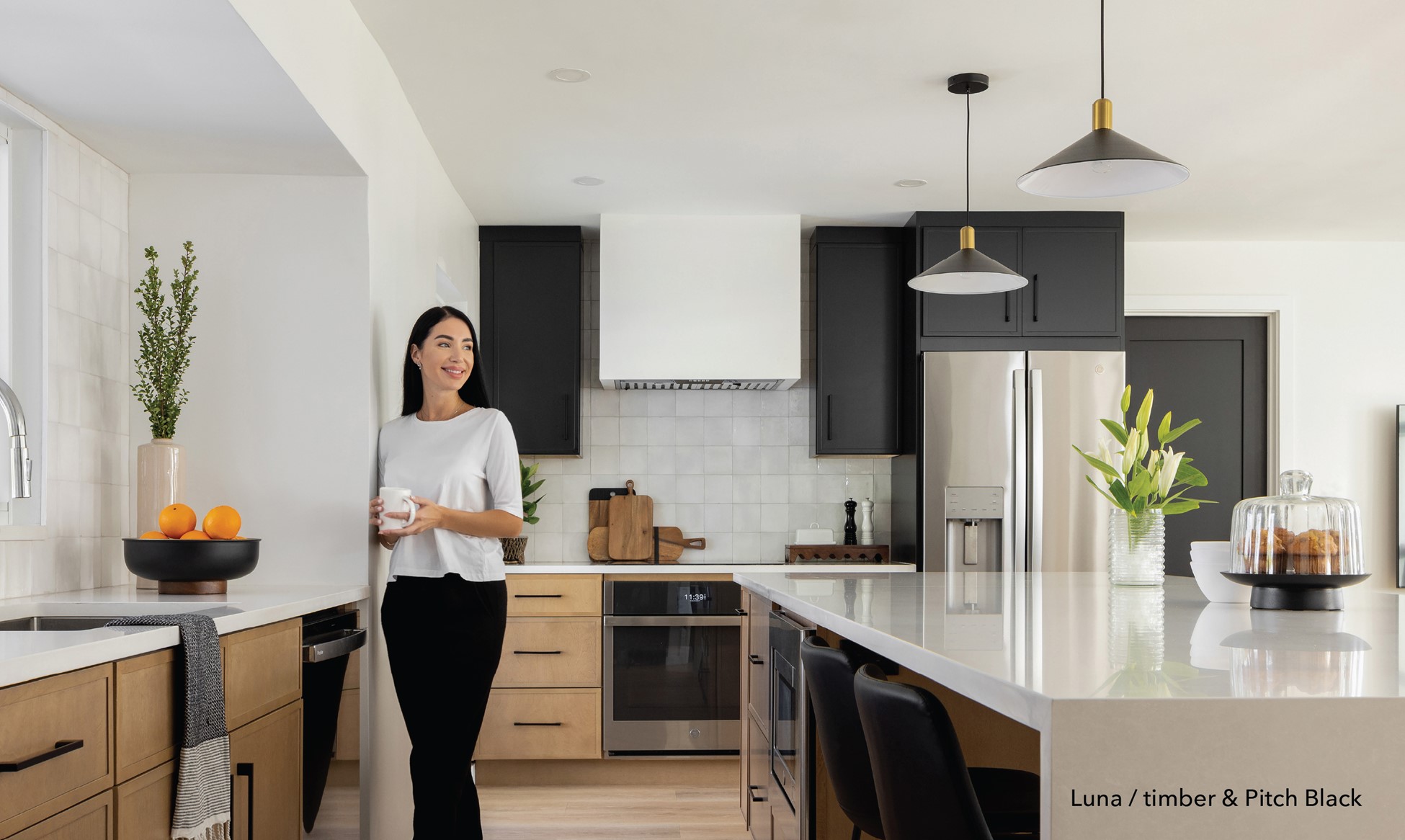
Two tone kitchens combine two cabinet colors, finishes or materials within one space. A designer might specify one finish for the perimeter and another for the island, use a lighter color above darker base cabinets or pair painted cabinetry with visible wood grain. The contrast can be bold, such as blue with warm oak, or quiet, such as two related neutrals.
Why choose two tone cabinets?
They can change how the room feels. Lighter upper cabinets can keep the sightline open, while a deeper finish below adds visual weight, an approach that can work especially well in smaller kitchens.
They help define a focal point. A contrasting island, bar or pantry gives the eye a clear place to land and distinguishes one zone from another.
They create a more personal palette. Balance a color you love with a neutral or natural wood for a result that feels collected rather than matched from top to bottom.
How to style a two tone kitchen
With two tone cabinetry, you have more freedom, but the best combinations still share a visual thread:
Choose the focal point. The island often carries the contrasting finish, but base cabinets, a pantry wall or a bar can do the same job.
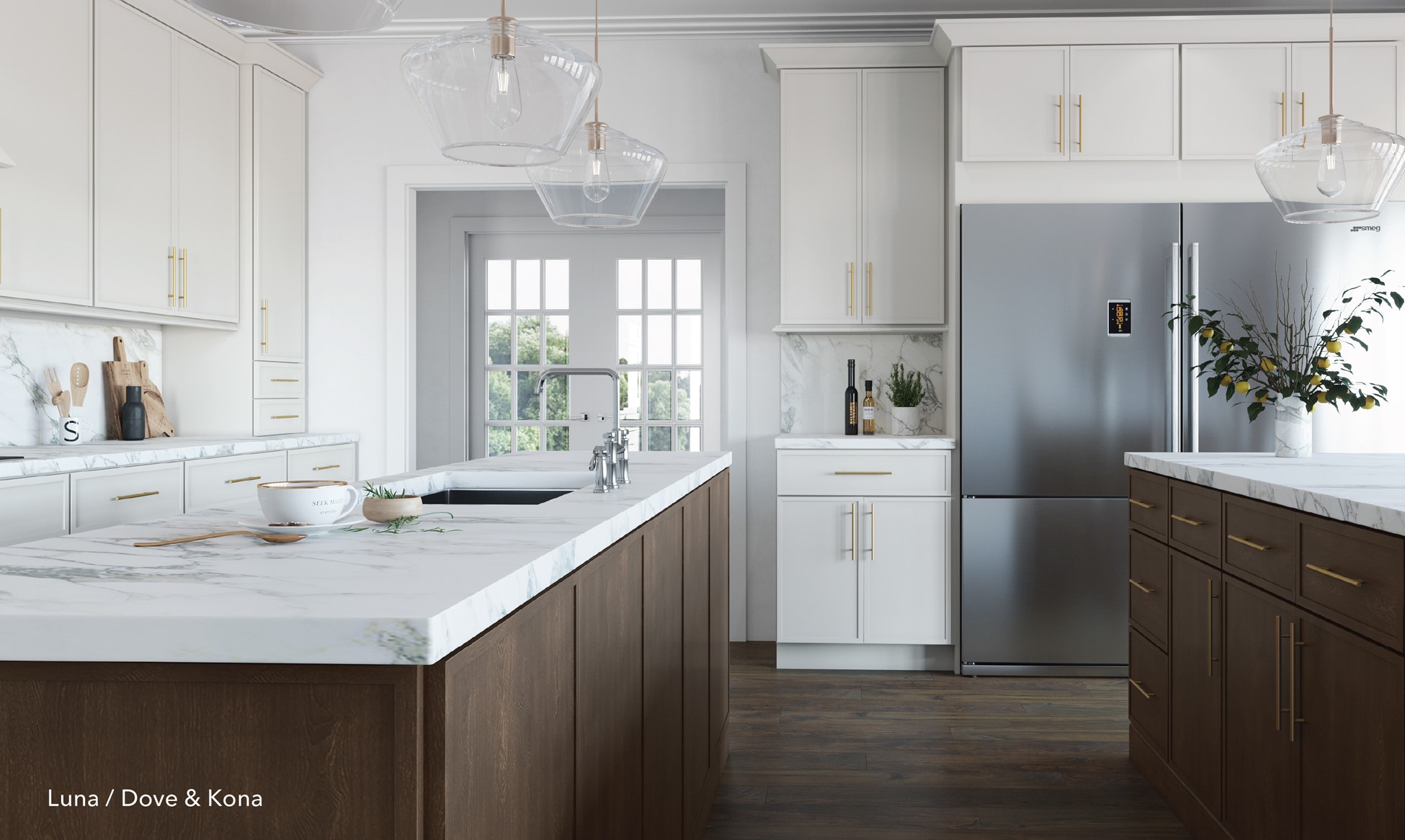
Consider contrast beyond color. By placing paint beside visible grain, you can build material dimension into the palette. Fabuwood's 2026 kitchen cabinet trends guide reflects this move toward warmer color, tactile finishes and wood grain.
Check the undertones. Warm woods sit naturally beside creamy whites, mushroom tones, earthy greens and softened blues. Countertops, backsplashes and hardware can bridge any temperature difference.
Let one finish lead. Two tone does not require a fifty fifty split. Reserve the second finish for the island or another architectural feature to create a clear hierarchy.
Keep the details connected. Repeating one hardware finish can unify the cabinetry, while countertops, backsplashes and flooring should relate to both sides of the palette.
Review samples in the room. Place cabinet samples beside the planned countertop, backsplash and flooring, then view them in natural and artificial light.
Two tone kitchen color ideas for 2026
This year's strongest pairings feel warmer and more tactile than the sharp black and white combinations that once defined the look.
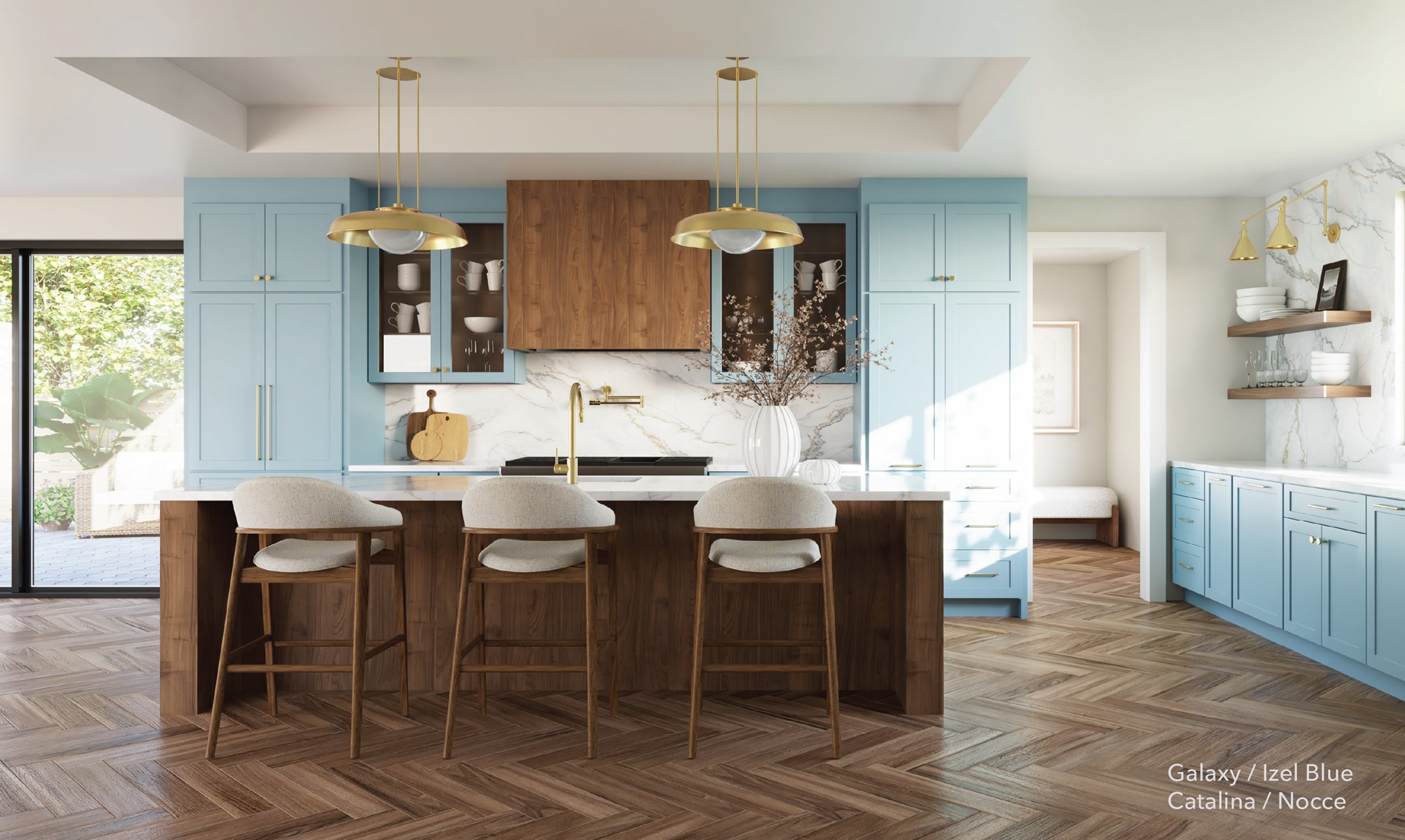
Pair atmospheric blue with natural wood. Use Izel Blue or Indigo on an island or base cabinets for calm depth, then bring in Natural Oak to warm the room.
Layer a new stain with a quiet neutral. Fabuwood's Designer Stain Collection introduces Biscuit, Claystone, Elderberry, Dark Aqua and Seaside Pine for Galaxy. Try Biscuit with Linen, Claystone with Cobblestone or Dark Aqua on an island with a lighter perimeter.
Warm up white with Natural Oak. Pair Natural Oak with Frost or Cloud White to introduce warmth, variation and texture for a softer, more lived in result.
Use Truffle as the grounding tone. Choose Truffle with Frost, Linen or Macadamia Beige when you want a warm tone between Timber and Mocha, with depth but none of black's starkness.
Use green as a neutral. Pair Pistachio Green, Sage Green or Hunter Green with warm whites or wood finishes, or choose Seaside Pine to carry green through visible grain
Try a moodier accent. Elderberry, Cabernet Red or Dark Aqua can give an island, bar or pantry wall a distinct identity while a softer neutral balances the room.
Keep the contrast quiet. Two tone can be as subtle as Frost with Stone. In the Two Toned Elegance project, the designer paired Galaxy Frost and Galaxy Stone for a soft shift from bright to warm, then added definition with matte black hardware.
Are two tone kitchens still in style?
Yes, although the look has matured. Designers are moving beyond a rigid formula of white uppers and navy lowers and using contrast through temperature, material and placement. A warm neutral perimeter with a stained island, a quiet blue beside Natural Oak or two related earth tones can create dimension without dividing the room.
The most enduring combinations begin with the room rather than the trend report. Consider the light, flooring, countertops and adjoining spaces, then choose two finishes that belong in the same story. That is how a fashionable palette becomes a kitchen you will still want years from now.
Use the Fabuwood Visualizer to explore color and finish combinations, then order samples to see how your favorites respond to the light in your space.
FAQs
What colors are popular for two tone kitchens in 2026?
Warm whites, natural and darker woods, earthy greens, atmospheric blues, mushroom neutrals and deeper accents such as burgundy or plum are shaping current palettes.
What is the best color combination for a timeless kitchen?
A warm white or soft neutral paired with natural wood is one of the most adaptable choices. For more color, combine a muted blue or green with a restrained wood or neutral finish.
Do two tone cabinets make a kitchen look larger?
They can. A lighter finish above may keep the sightline open, while a deeper finish below grounds the room. The effect depends on lighting, proportions and placement.
Where should the darker cabinet color go?
Deeper colors often work well on base cabinets or an island because they add weight lower in the room. A tall pantry wall or bar can also carry the darker finish when the architecture supports it.