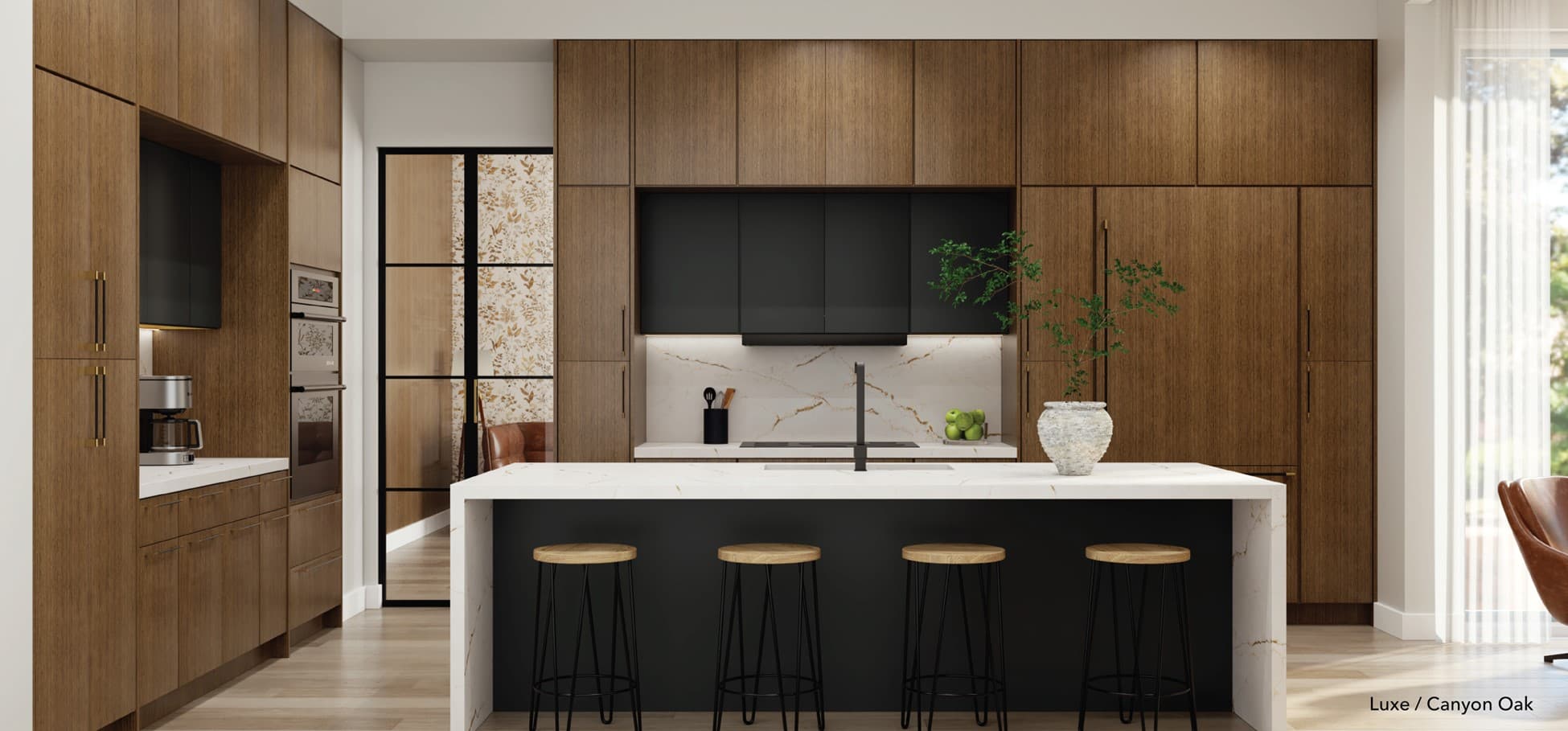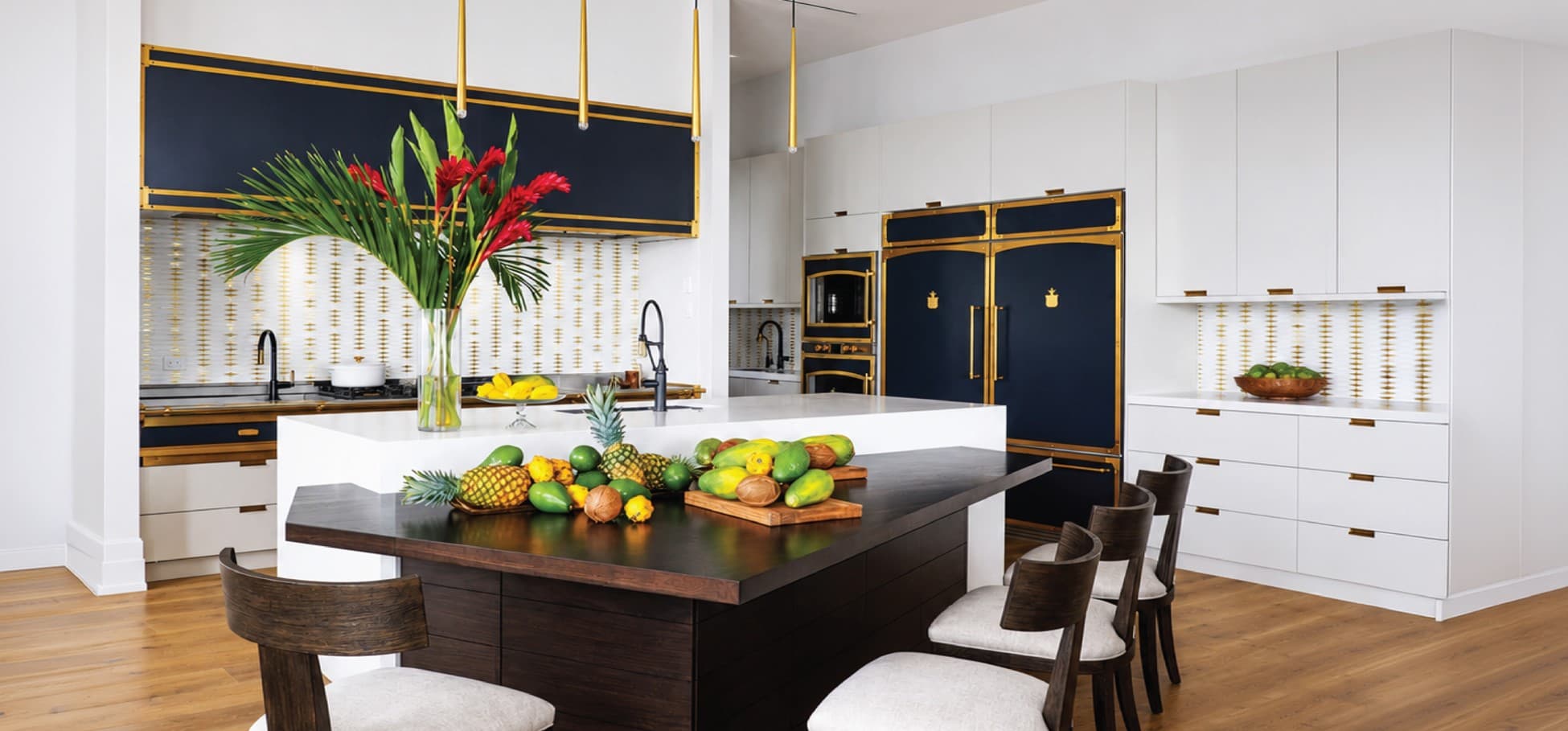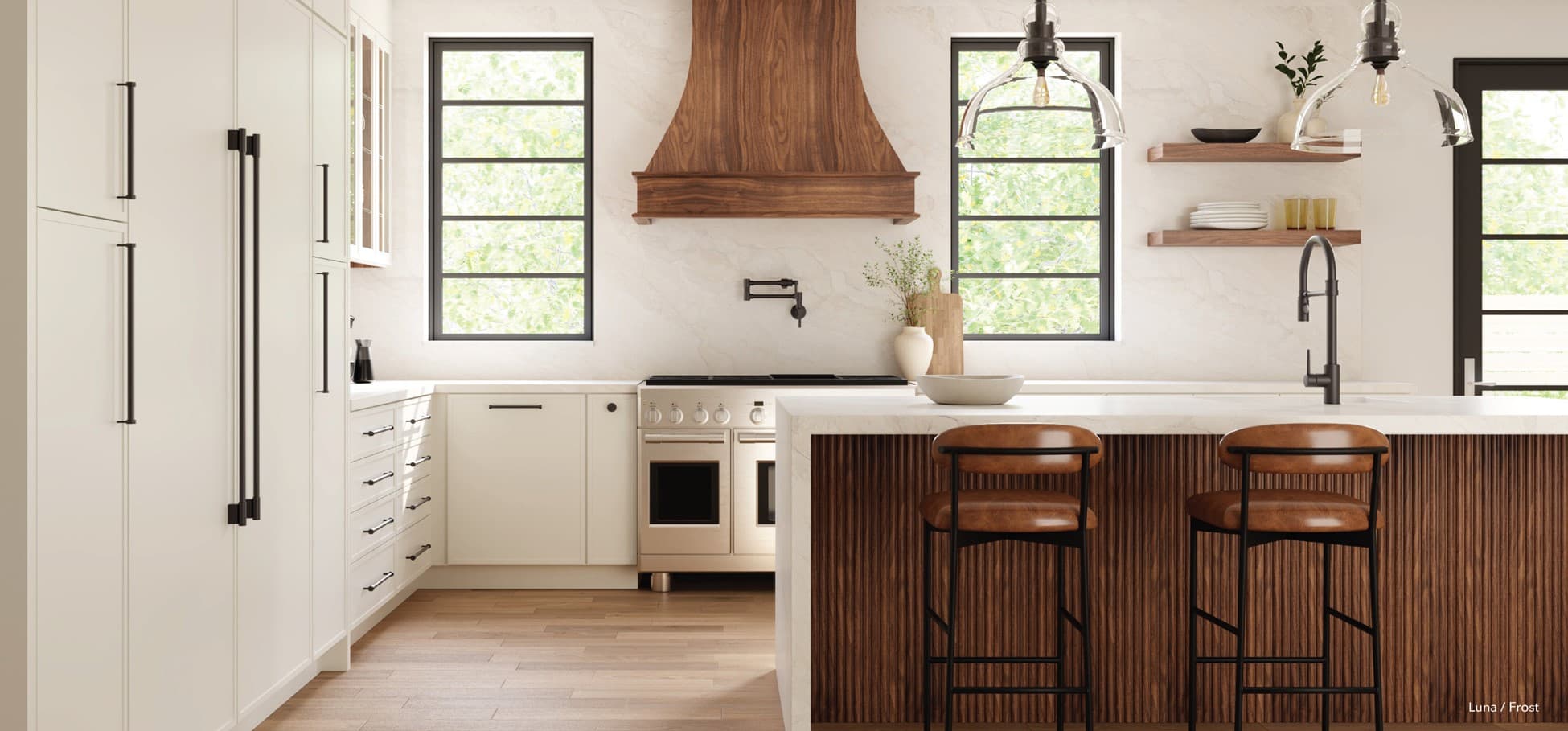
September changes the lighting and the leaves. The sun sets a bit earlier, and the corners grow softer. It makes you want to whip out the candles, perhaps light some sage, and drink tea. After a summer spent making the home feel bright and breezy, a little depth starts to look especially good.
Take a look at walnut.
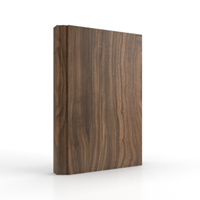
With color that can move from caramel to deep chocolate and grain expressive enough to hold the eye, walnut brings warmth and presence. Rather than running with it, use it intentionally in specific places for maximum impact.
Are walnut and other dark wood kitchen features still trending in 2026?
Yes. Dark wood, in general, is having a very good year. Vogue’s 2026 interior design report points to renewed interest in darker toned woods and homes that feel layered, personal, and lived in. ELLE Decor’s fall 2026 forecast named walnut among the medium and dark woods returning after years of paler palettes.
Walnut’s appeal is quite old, too. Its combination of rich color, visible grain, and compatibility with stone, metal, and painted finishes has long made it a favorite across contemporary, transitional, and midcentury inspired interiors. As STEVENSWOOD explains, walnut can ground a room without overwhelming it.
How can I add walnut accents to a kitchen without installing walnut cabinets?
The kitchen should feel warm, not visually heavy. You do not need dark wood kitchen cabinets from wall to wall to create that sense of depth. Walnut used as an accent delivers the richness people are craving while allowing the larger palette to stay open, balanced, and entirely personal.
Where should walnut be used as an accent in a kitchen?
Introduce walnut through Fabuwood in a few carefully chosen places.
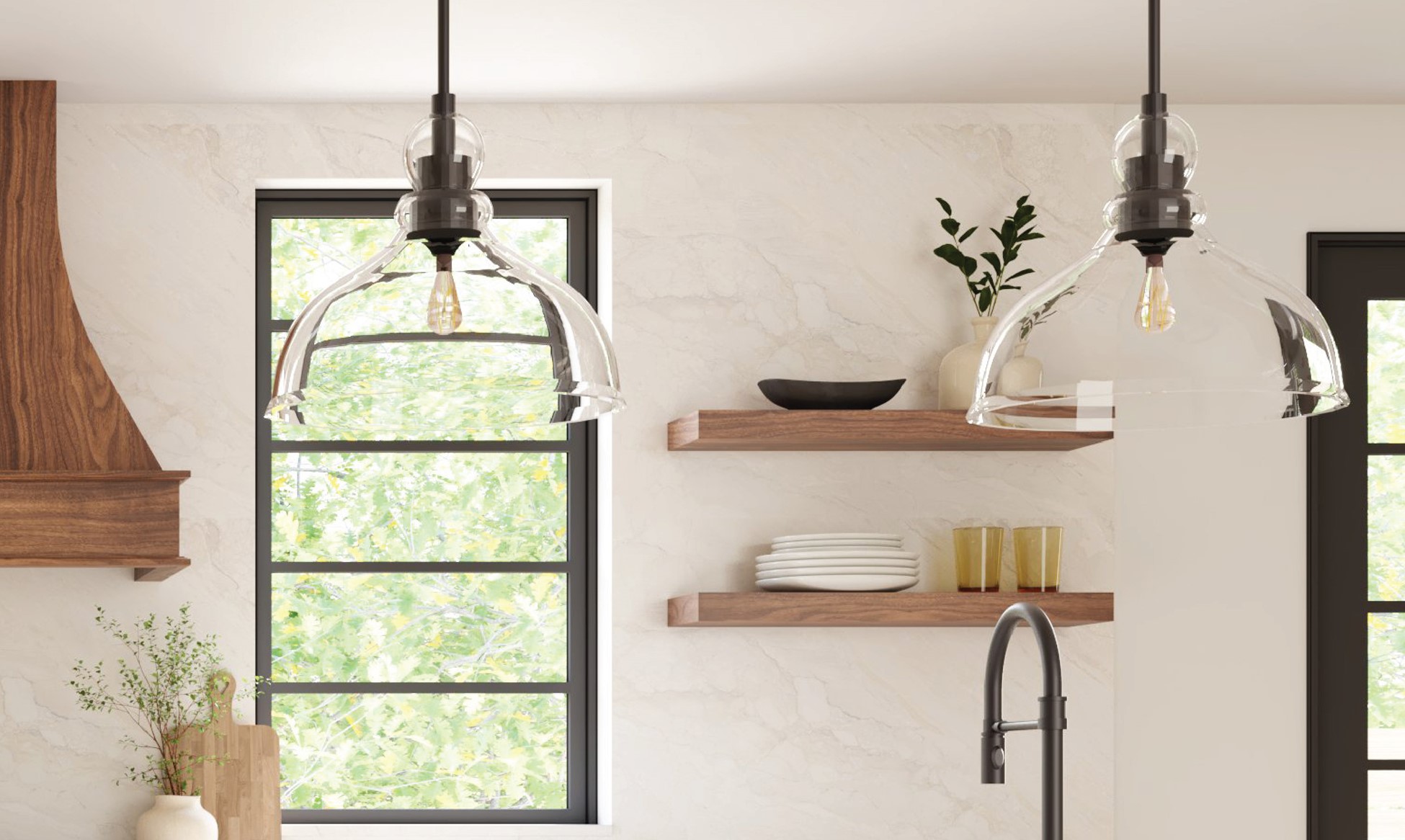
1. Floating shelf
Are walnut floating shelves a good choice for kitchens? Yes. A walnut floating shelf gives an all white, cream, or lightly stained kitchen a strong horizontal line and a warm place for the objects used every day. Even a single walnut wall shelf can introduce contrast without visually weighing down the room.
Order a sample first, then place it beside your cabinet door, countertop, and backsplash so the undertones can be considered together in the actual light of the room.
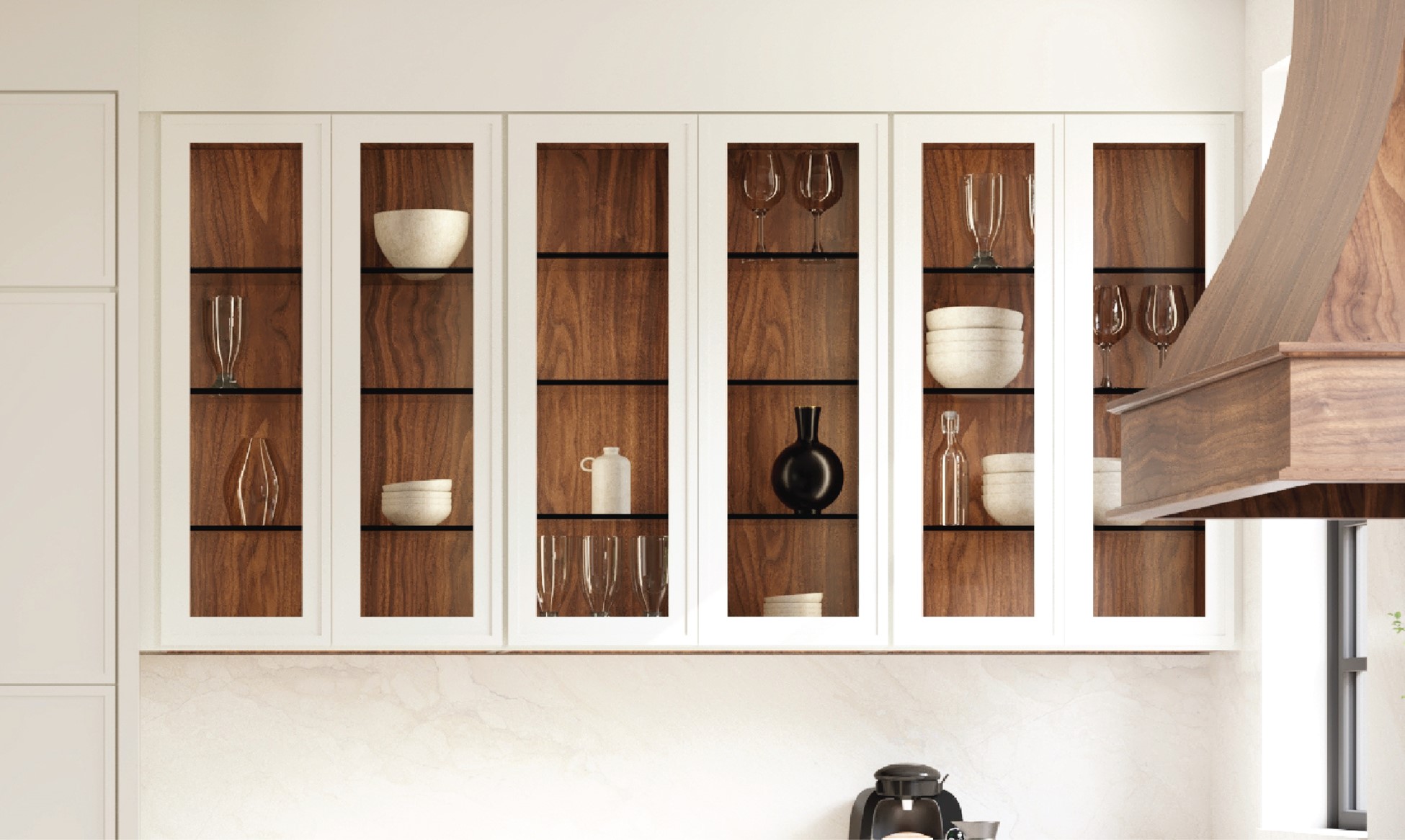
2. Interior
A walnut toned cabinet interior creates a quiet reveal when the door opens. It works especially well in glass front cabinetry, a coffee bar, a beverage center, or a display cabinet, where the darker backdrop can make glassware, ceramics, and metallic details feel more collected.
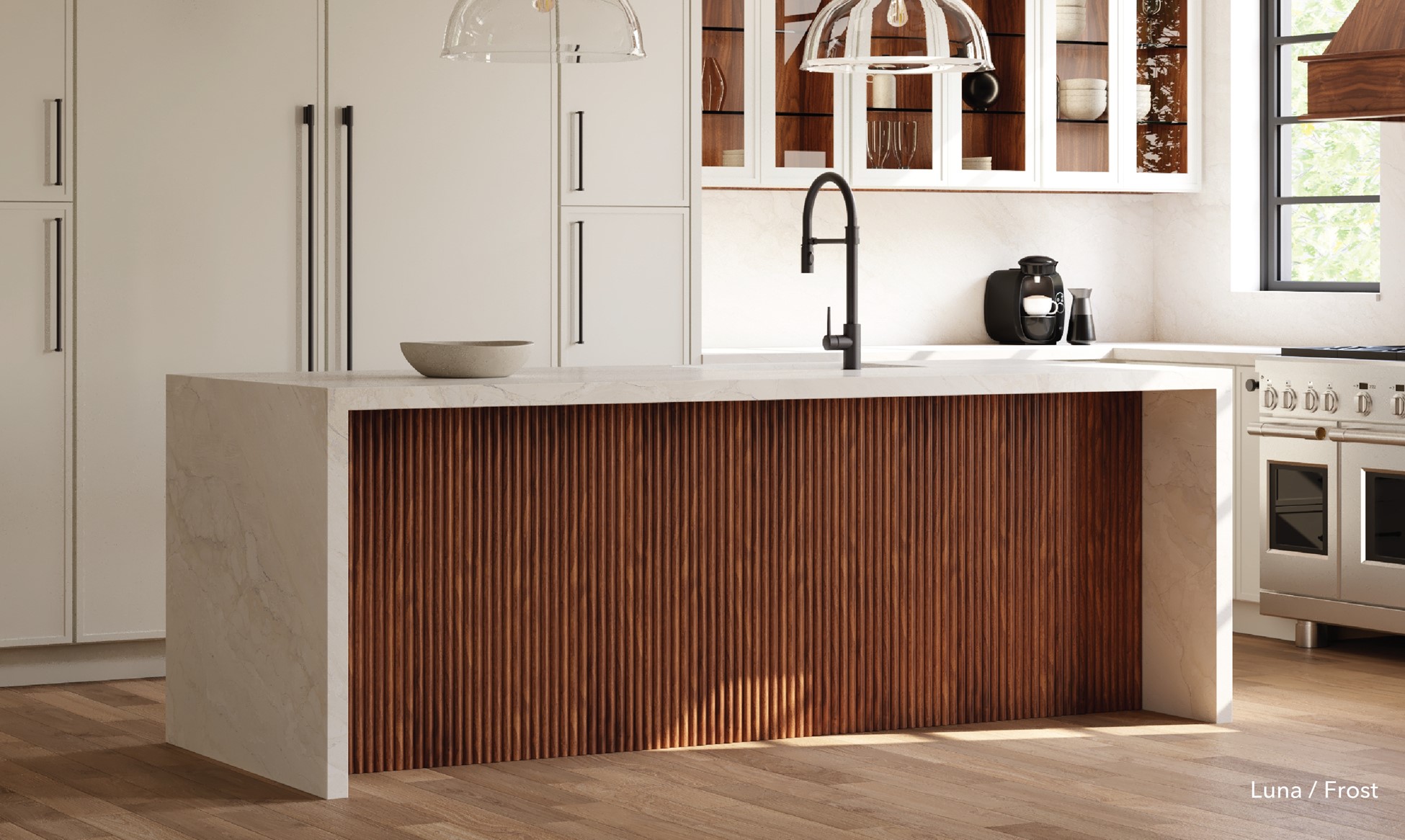
3. Reeded or fluted panels
Are fluted walnut panels practical for kitchen design? Yes, especially when used in areas where they can add texture without interfering with the kitchen’s everyday function. Walnut reeded or fluted wood panels combine two kinds of movement: the natural variation of the grain and the repeating shadow of the grooves.
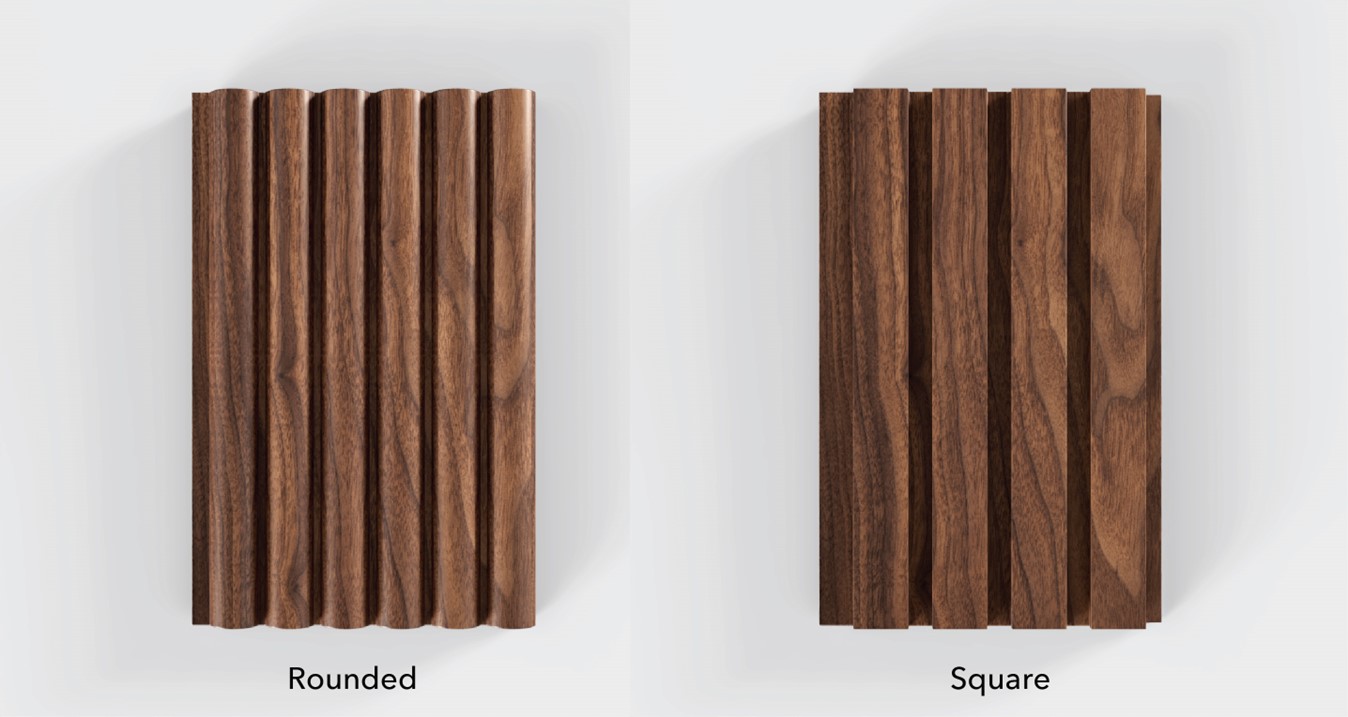
Use them on the back of an island, around a bar, on an accent wall, or as furniture like panels in an adjoining living space. Fluted wood wall panels can also create continuity between the kitchen and nearby gathering areas.
4. Range hood
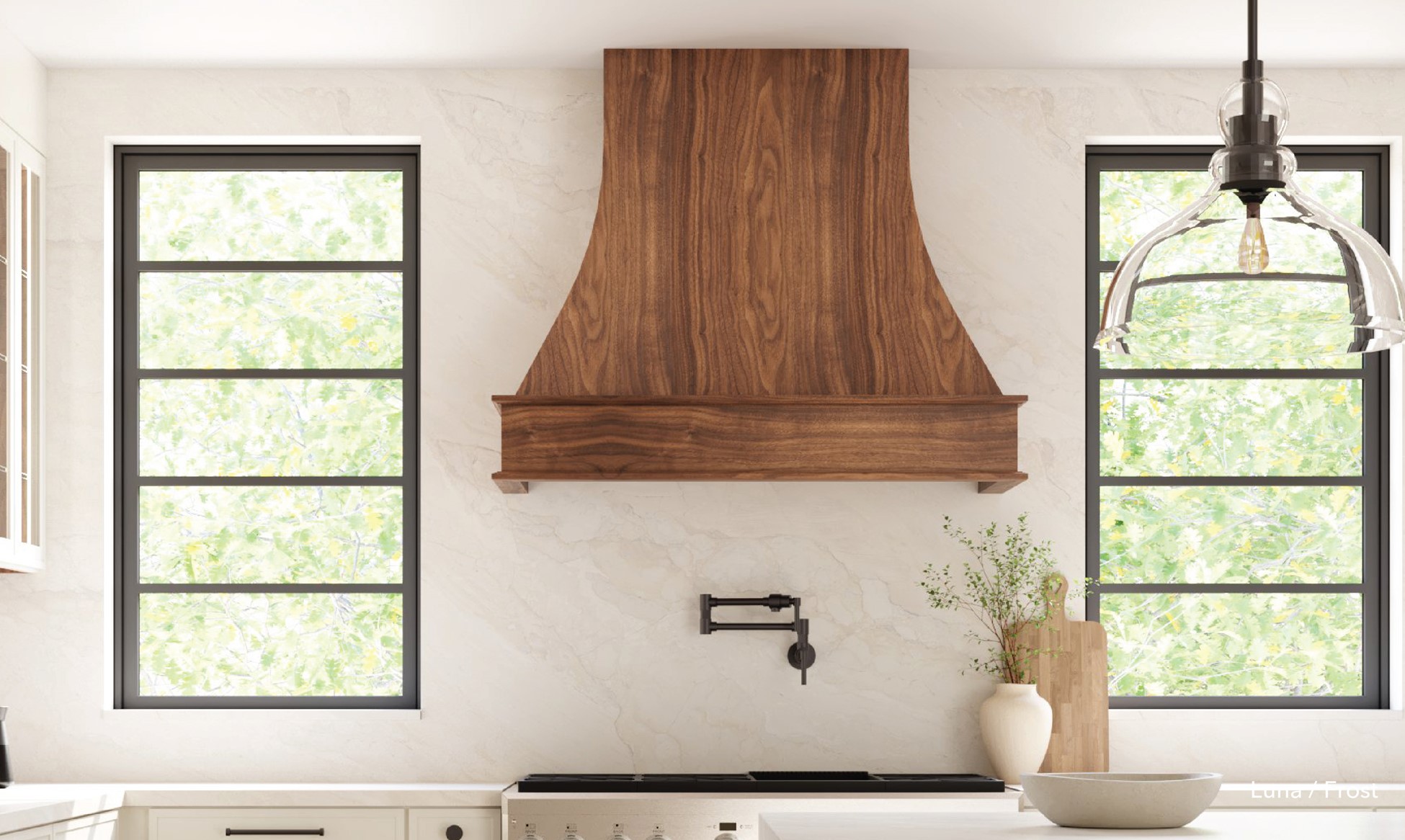
How can a walnut range hood become a kitchen focal point? Because the range hood naturally draws the eye above the range, even one band of walnut can create a strong visual anchor. It can also connect wood shelving, seating, flooring, or nearby furniture without requiring everything to match.
A new selection of walnut range hoods is coming soon to Fabuwood. Keep reading for a first look at this newest addition.
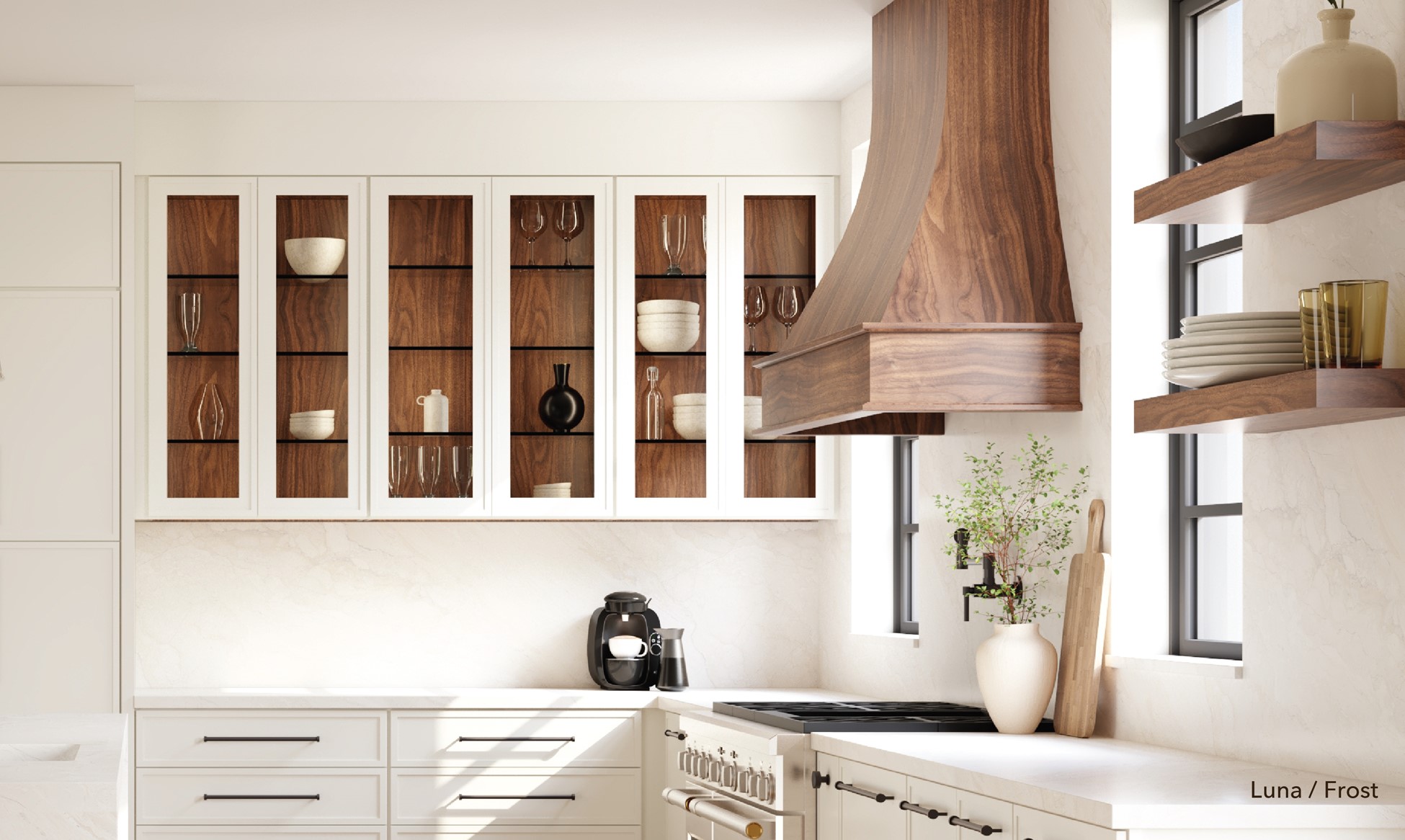
Colors and materials that pair well with walnut
What cabinet colors and finishes pair best with walnut accents? The easiest walnut kitchen pairings give the wood either contrast or company.
Soft white, cream, and light stone make walnut feel crisp and architectural.
Mineral green, burgundy, oxblood, and earthy clay bring out its moodier side, particularly as the evenings begin arriving earlier.
Brushed brass, bronze, and black metal sharpen the grain without competing with it.
Plaster, honed stone, and other matte surfaces balance walnut’s visual richness with something quiet.
Mixing walnut with other wood tones
How do you mix walnut accents with other wood tones without clashing? Make the contrast look intentional. Lighter woods can work beautifully alongside walnut when their tones are clearly distinct. Instead of searching for an almost identical match, allow one wood to be noticeably lighter, darker, warmer, or cooler than the other.
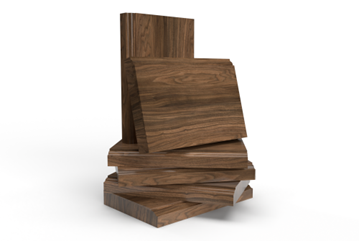
Ready to find where walnut fits? Order a walnut sample, speak with a Fabuwood dealer, or explore the Fabuwood Style Guide to discover the cabinetry finishes that pair beautifully with it.